
Morgan Stanley Tokenizes US Equities and Treasurys via DTCC: What Finance Teams Should Do
Morgan Stanley has begun using DTCC's new tokenization service to tokenize US equities and Treasurys, and that matters well beyond one bank's press statement. When a major institution runs tokenized securities through the same depository plumbing that already holds the market's assets, finance teams, auditors and CFOs have to treat tokenized instruments as a normal part of the books, not an experiment. Firms that still rely on spreadsheets will struggle, and the case for purpose-built crypto accounting software gets stronger with every large institution that goes live.

What Morgan Stanley and DTCC actually announced
The facts are narrow but significant. According to The Block, Morgan Stanley said it is among the first banks to tokenize real-world assets using the new infrastructure from the Depository Trust & Clearing Corporation. The bank says it has tokenized US equities and Treasurys through the service, which launched last week.
The bank's stated purpose
Amy Oldenburg, Morgan Stanley's head of digital assets strategy, framed the exercise as learning. In her words, hands-on experience integrating tokenized securities with established market infrastructure will inform how the firm's digital asset capabilities develop as the market evolves. That is a measured statement. It does not describe a product launch for clients, and it should not be read as one.
The wider group of institutions
DTC, the DTCC depository subsidiary that holds $114 trillion in assets under custody, listed a group of institutions with access to the service at launch. The names include Bank of America, Barclays and BNP Paribas. Citi, Fidelity Investments, JPMorgan, State Street and UBS were also listed, with further users to be onboarded on a rolling basis. DTCC said it built the service with input from more than 150 firms, and that it initially supports a specific set of blockchain networks, including a private Besu network.
Separate timeline for tokenized equities trading
Two things should not be confused. Using DTCC's service to tokenize securities is one step. Morgan Stanley's plan to support tokenized equities on its alternative trading system is another, and The Block reports that target is now the first quarter of 2027, later than the earlier second-half 2026 goal. Oldenburg told The Block last month that the bank was building the infrastructure needed. The New York Stock Exchange and its parent, Intercontinental Exchange, are also advancing plans for a tokenized trading platform, and Broadridge, Computershare, Equiniti and Superstate have signed agreements to serve in a supporting capacity.
For context on how DTCC's push has been developing, see our earlier piece on DTCC tokenization and what finance teams must prepare for.
Why this changes the accounting picture
Tokenized securities are still securities. A tokenized Treasury is a Treasury exposure, and a tokenized equity is an equity exposure. The token is a record-keeping wrapper placed on the instrument, and the wrapper is where the new accounting questions arise. The source article does not describe how Morgan Stanley or DTCC treat these tokens for financial reporting, so none of what follows should be read as a statement about their policies. It is analysis of what a finance team needs to be able to answer when these instruments appear in its own records.
Recognition and the underlying asset
The first question is what exactly the entity holds. Is it the security itself, recorded on a distributed ledger, or a claim on a custodian or issuer that references the security? The answer drives recognition, classification and disclosure. Teams should obtain the legal documentation and the custodian's description of the record before deciding how to book the position, and should not assume that every tokenized product has the same legal structure just because the market label is similar.
Custody and the record of ownership
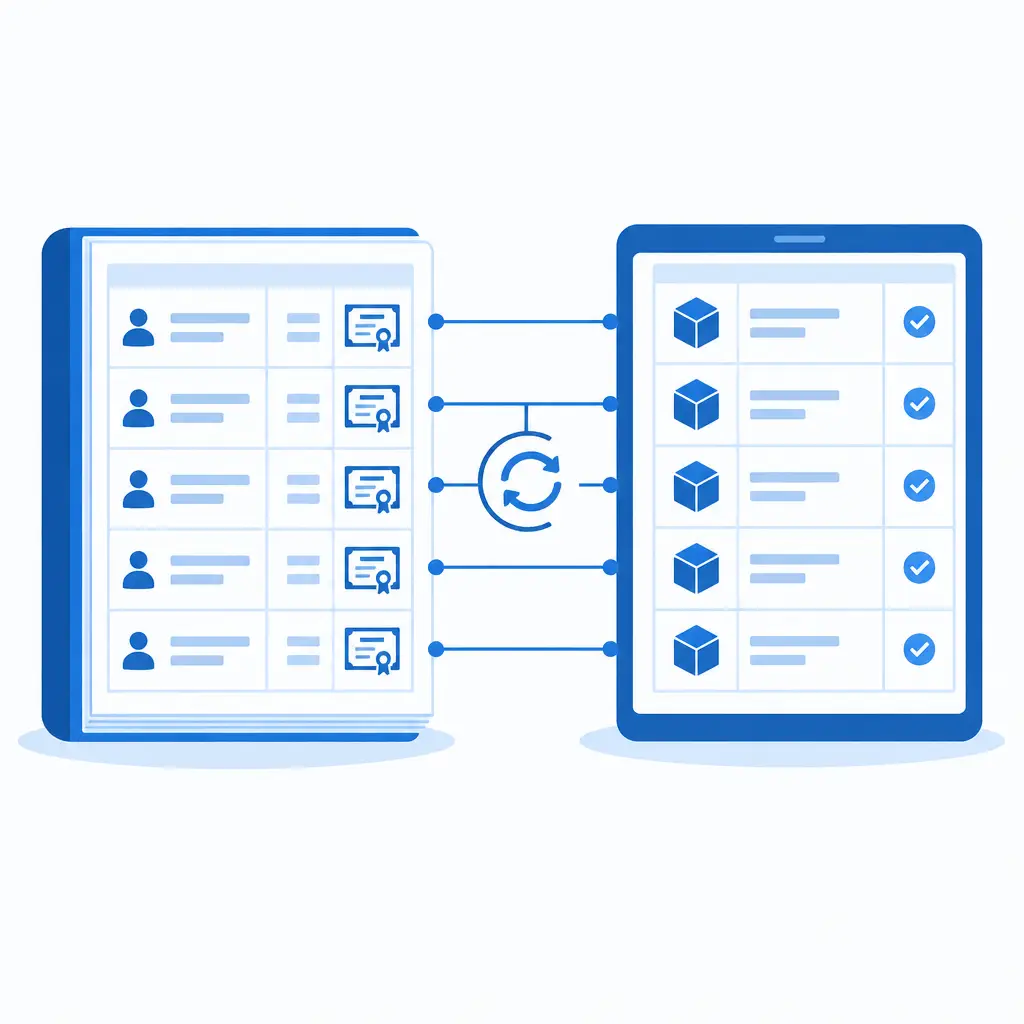
Where a depository sits in the chain, ownership evidence may still be anchored to that depository's records, with the token acting as a representation. That affects what an auditor will accept as evidence of existence and rights. A firm's reconciliation should therefore be able to match three things: the token-level record, the custodian or depository statement, and the general ledger balance. If any of the three cannot be produced on demand, the audit trail has a gap.
Valuation and fair value inputs
Treasurys and listed equities normally have observable prices, which makes valuation easier than for many crypto-native assets. The wrinkle is timing and venue. If a token trades or settles on a different schedule from the underlying security, the price used at period end needs a documented source and a documented cut-off. Software that applies one price feed to everything, without tracking the source per asset, will create avoidable audit questions.
What it means for B2B readers: firms, CFOs and auditors
The audience for this development is not retail. It is accounting firms with institutional clients, corporate treasurers who may hold tokenized cash-like instruments, fund administrators, and auditors who will be sampling these positions sooner than many expected.
Accounting firms and fund administrators
Client onboarding checklists should now include a question about tokenized securities and the platform or depository through which they are held. If a client says it holds a tokenized Treasury, the firm needs to know the issuer, the custodian, the network, and the legal rights attached. Capturing those fields consistently at the start saves rework at year end. This is where digital asset accounting software earns its place: it can hold token-level identifiers, wallet or account addresses, and custodian references alongside the ledger entry, rather than in a separate document nobody reconciles.
CFOs and corporate treasury
Treasury teams should watch for tokenized money-market style and Treasury products appearing in banking and custody offerings. The decision to hold them is a treasury policy matter, and the accounting follows the legal substance. A CFO should ask the bank or custodian for a written description of how the position is recorded, how it is segregated, and what happens in an operational failure. Policy documents covering permitted instruments should be updated before the first position is bought, not after.
Auditors and internal audit
For auditors, the questions are existence, rights and obligations, valuation, and completeness. Confirmation procedures may need to address both the depository and any blockchain-level record. Internal audit should test whether the entity can independently verify a token balance, and whether access to keys or accounts is controlled with the same rigor as bank access. Our broader work on enterprise risk management for crypto-active firms is relevant here, since operational and custody risk sit at the centre of these controls.
Tax and compliance angles to keep in view
The source article is a market-structure story and says nothing about tax or AML treatment, so this section stays at the level of questions to ask. It does not describe any ruling or rule.
Tax treatment follows the substance
For US taxpayers, the general starting point is that the tax character of a tokenized security tracks the underlying instrument and the legal rights it conveys. Interest on a tokenized Treasury and dividends on a tokenized equity raise the same reporting questions as the traditional versions. Cost basis, holding period and lot tracking still apply. What changes is the data source: transaction records may come from a depository, a bank or a ledger rather than a single brokerage statement. Firms preparing returns for clients should confirm which party will issue tax reporting documents, and should not assume a blockchain record replaces them.
AML and sanctions screening
Tokenized securities moving through regulated depository infrastructure sit in a different compliance posture from tokens on open networks, though counterparties and wallets still need to be understood. Teams that already run blockchain analytics and sanctions screening for crypto should decide whether those controls extend to tokenized securities, and document the reasoning either way. Recent enforcement and sanctions developments, such as the FATF October 2026 statements, are a reminder that jurisdictional risk lists feed directly into transaction monitoring.
Cross-border considerations
The story is classified as global, and several of the named participants operate across borders. A firm with clients or entities in more than one jurisdiction should expect different regulatory classifications for the same tokenized instrument. Our coverage of Hong Kong's SFC tokenisation push shows how another major market is approaching the same shift.
Practical next steps for finance teams
Nothing here requires a large project today, but a handful of steps will prevent scrambling once clients or counterparties start holding these instruments.
A short readiness checklist
Start with the data model. Confirm your ledger can record a token identifier, the underlying security identifier, the custodian or depository, the network, and the legal form of the claim as separate fields. Then check reconciliation: can you tie token-level records to custodian statements and to the general ledger without manual re-keying? Next, review policies for valuation sources and cut-off times, and for who may approve a new instrument type. Finally, brief your audit team so evidence requests are designed before fieldwork, not during it.
Choosing tooling
If you are evaluating crypto bookkeeping software or a wider platform, test it against tokenized securities, not just spot crypto. Ask whether it can handle instruments that carry coupons or dividends, whether it supports multiple pricing sources, and whether it exports an audit-ready trail. A tool built only around exchange trades and wallet transfers may need extra controls to cope with securities that happen to be tokenized.
What not to assume
Do not assume that Morgan Stanley's activity means tokenized equities are broadly available to clients now. The bank's own timeline for supporting tokenized equities on its trading system points to the first quarter of 2027. Do not assume uniform treatment across institutions either. The listed participants may each integrate differently, and their disclosures will be the authoritative reference for how a given product works.
Frequently asked questions
Has Morgan Stanley launched tokenized equities for clients?
Not according to the source. The bank says it has tokenized US equities and Treasurys through DTCC's service. Separately, it expects to support tokenized equities on its alternative trading system in the first quarter of 2027.
Which institutions have access to DTCC's tokenization service?
DTC listed Bank of America, Barclays, BNP Paribas, Citi, Fidelity Investments, JPMorgan, State Street and UBS alongside Morgan Stanley, with more users to be onboarded on a rolling basis.
Does tokenizing a security change how it is taxed?
The source does not address tax. As a general starting point, tax character follows the underlying instrument and the legal rights attached, so a tokenized Treasury or equity should be analysed on the same basis as the traditional version. Confirm specifics with a qualified adviser.
What should an auditor ask for first?
Ask for the legal description of the claim, the custodian or depository statement, and a way to independently verify the token-level record. Then reconcile all three to the general ledger.
Is spreadsheet bookkeeping still workable for tokenized securities?
For very small, static positions it may be. As volumes, instrument types and custodians grow, dedicated digital asset accounting software with audit trails and reconciliation becomes much easier to defend.
Source: The Block