
Greece Approves 10% Crypto Gains Tax and 15% DeFi Levy: DeFi Accounting Impact
Greece has approved a 10% tax on crypto gains and a 15% levy on DeFi income, according to CoinDesk's report of 6 November 2026. For finance teams, the headline matters because it creates two distinct rates for two distinct kinds of activity, which puts DeFi accounting and transaction classification at the centre of Greek compliance work. If your crypto accounting software cannot separate disposal gains from protocol income at the transaction level, this is the moment to find out.

One caution up front. The source material available to us confirms the two rates and the fact of approval, and little else. We do not yet have verified detail on the effective date, the exact definition of "DeFi income", the treatment of losses, filing mechanics or who withholds and reports. This article therefore concentrates on what the two-rate structure means for ledgers and controls, and it flags clearly where you should wait for the official text before committing to a treatment.
What Greece approved and what remains unconfirmed
The two confirmed elements
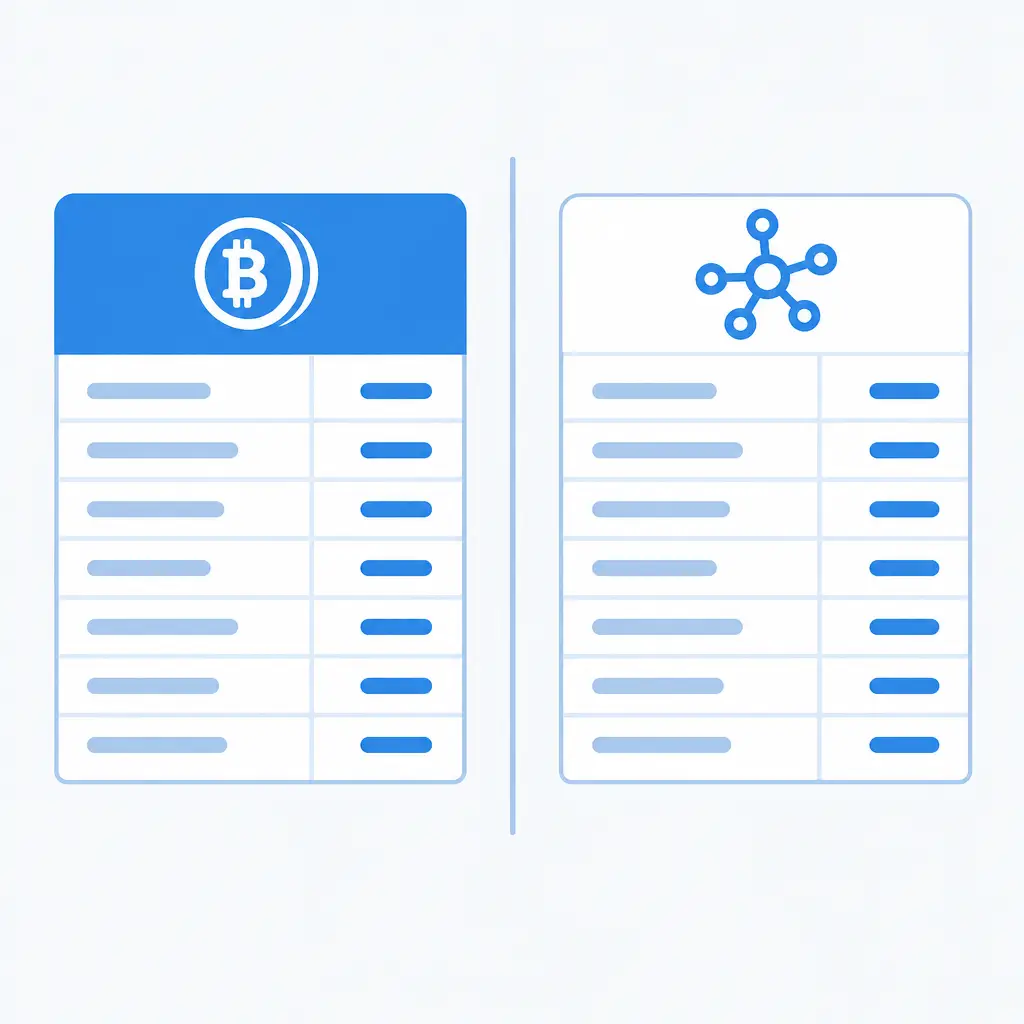
The first element is a 10% tax on crypto gains. The second is a 15% levy on DeFi income. Those are the two figures reported, and they are different in kind as well as in rate. A tax on gains attaches to the difference between what you paid for an asset and what you realised when you disposed of it. A levy on income attaches to receipts, such as rewards or yield, that arise from participating in a protocol. The wording in the report suggests the legislature intends to treat these as separate buckets rather than fold everything into one rate.
What we cannot yet state
Several questions will decide how heavy the compliance burden turns out to be, and none of them is answered by the headline facts:
- The date from which each charge applies, and whether any transitional rule covers positions opened earlier.
- How "DeFi income" is defined, and whether it covers lending interest, liquidity provision fees, staking-type rewards, token emissions or all of them.
- Whether the 10% gains rate applies to crypto-to-crypto swaps or only to conversions into fiat.
- Whether losses can offset gains, and across which periods.
- Who must report: the taxpayer alone, or also intermediaries such as exchanges and custodians.
Until the enacted text and any guidance from the Greek tax authority are available, treat each of these as open. Do not assume that rules from another jurisdiction carry across.
Why two rates change the ledger, not just the return
Gains and income are different accounting objects
A single blended crypto tax rate is operationally simple: you compute a net result and apply one percentage. Two rates are not. Each transaction has to be assigned to one bucket, and the assignment has to be defensible. A swap that realises a gain sits in the 10% bucket. A reward received from a protocol sits, on the face of the report, in the 15% bucket. A transaction that does both, for instance a withdrawal from a liquidity pool that returns principal plus accrued fees in a different asset mix, has to be split into its components.
That split is where most errors will happen. Protocol receipts rarely arrive labelled as "principal" or "income". They arrive as token transfers from a contract address, and someone has to decide how to characterise them. Our earlier piece on how DeFi protocol mechanics flow into your books walks through why that characterisation step is the hard part of DeFi bookkeeping, and the Greek regime makes it more consequential because the answer now changes the rate.
The cost basis question gets sharper
Income recognised at receipt typically becomes the cost basis of the received token. That means a reward taxed under the 15% levy when it arrives can later produce a gain or loss when it is sold, which would fall under the 10% gains tax. Whether Greece intends that sequence is something the final rules will need to confirm, but it is the standard logic of income-then-disposal, and your records should be capable of supporting it. If the fair value at receipt is not captured at the time, reconstructing it later is slow and contestable.
For practical purposes, this means the data you need to capture per transaction includes:
- Date and time of receipt or disposal, in a consistent time zone.
- Asset, quantity and the fair value in euros at that moment, with the pricing source recorded.
- Counterparty or contract address, so the protocol and function can be identified later.
- An economic-character tag: disposal, protocol income, transfer between own wallets, fee, or return of principal.
Implications for accounting firms and CFOs
Firms advising Greek-resident clients
If you serve clients who are tax resident in Greece or hold Greek entities, the practical step now is a scoping exercise. Identify which clients transact in DeFi at all, and which of those interact with lending markets, liquidity pools, staking-style arrangements or yield aggregators. Those are the clients where the 15% levy is most likely to bite. Clients who only buy, hold and sell on centralised venues are more likely to be exposed to the 10% gains tax alone, subject to the final definitions.
Engagement letters deserve a second look as well. If your firm prepares computations from client-supplied wallet exports, make clear who is responsible for completeness of the wallet list. DeFi activity is spread across addresses and chains, and a missing address can mean missing income. A two-rate regime raises the stakes on that completeness assumption because under-reported income is taxed at the higher rate.
CFOs and corporate treasuries
For a company holding digital assets, the key question is how the new charges interact with corporate income tax and the existing financial reporting treatment. We do not have confirmation of whether the 10% and 15% charges apply to legal entities, to individuals only, or to both, and that is the single most important unknown for treasury teams. Do not book a deferred tax position on the basis of the headline alone. Instead, model a range: the entity-level outcome if the charges apply, and if they do not, so the board sees the sensitivity.
On the financial reporting side, the rate that applies to a gain is a tax measurement question, but the recognition of yield as income is an accounting policy question that should already be documented. Teams that have not written down a policy for protocol rewards, covering when they are recognised and at what value, should do so now. The policy has to line up with whatever the tax rules ultimately treat as DeFi income, or you will carry a permanent book-tax difference that someone has to explain at audit.
What this means for tooling
Any crypto accounting software or digital asset accounting software you rely on needs to do three things for this regime to be workable: tag transactions by economic character, retain the fair value and source at the time of each event, and let a reviewer override a classification with an audit trail. Spreadsheet-based crypto bookkeeping software workflows can manage the first and third with discipline, but the second becomes difficult at DeFi volumes, where a single wallet can produce hundreds of small reward events a month.
Tax and AML considerations
Tax reporting
A levy on DeFi income presumes that the tax authority expects to see this income reported. Self-reported DeFi income is hard to verify from the outside, which is why regimes of this type tend to be paired with data-matching, wallet disclosure obligations or reporting by service providers. We have no confirmation of which of those, if any, Greece has adopted. Prepare as though the authority could ask you to substantiate any figure with wallet-level evidence, because that is the safer working assumption for retention and documentation.
Retention itself deserves attention. Keep raw on-chain data, exchange exports and the pricing source used for each valuation, and keep the version of the classification logic that was applied. If rules change on a later date, you will want to show which rule you applied to which period.
AML and source-of-funds angles
Tax and AML questions overlap here. A client who has been earning DeFi income in prior periods without declaring it now has a visible incentive to regularise. Firms that are obliged entities under their local AML rules should consider how a client's disclosure of previously unreported income interacts with their own suspicious activity reporting duties. This is a question for your MLRO and legal counsel, not something the headline facts resolve, but it is better raised before a client walks in with three years of unreconciled wallet activity than after.
Source-of-funds checks also become more relevant. If a client's wealth is partly derived from DeFi yield, the documentation trail for that yield is now both a tax record and an AML record, and the two should be consistent.
Practical next steps before the detail lands
For the next 30 days
- Inventory clients and entities with Greek tax residence or Greek reporting obligations and flag the ones with DeFi activity.
- Confirm that your wallet and exchange data collection covers every address, chain and venue the client uses.
- Add a gains-versus-income tag to your chart of accounts or transaction taxonomy if it is not already there.
- Write or refresh the accounting policy for protocol rewards, including recognition timing and valuation basis.
- Set up monitoring for the enacted text and tax authority guidance, and assign a named person to review it.
When official guidance is published
Read the definition of DeFi income first, because it determines the size of the 15% bucket. Then check the treatment of crypto-to-crypto swaps and of losses, because those decide how much of the 10% regime applies to your clients' actual trading patterns. Finally, check effective dates and any transitional provisions, then decide whether prior-period data needs to be re-cut under the new classification. If you already have fair value and source data for historic events, re-cutting is a reporting exercise. If you do not, it is a reconstruction project, and it is cheaper to start collecting that data now.
A wider pattern across jurisdictions
Greece is not alone in wrestling with how and when to tax crypto. Other jurisdictions are still moving at different speeds, and some are delaying. Our coverage of South Korea's proposed fourth crypto tax delay shows the opposite end of the spectrum: a regime that has repeatedly been pushed back. For multi-jurisdiction groups, the lesson is that a flexible, tag-based ledger design absorbs both kinds of change better than one hard-coded to a single country's rules. For wider context on reporting obligations, see our crypto compliance reporting hub.
FAQ
What exactly did Greece approve?
According to CoinDesk's report, Greece approved a 10% tax on crypto gains and a 15% levy on DeFi income. Beyond those two rates, we have not verified the detailed provisions, so check the enacted text and official guidance before applying a treatment.
Does the 15% DeFi levy apply to staking and lending rewards?
That depends on how the legislation defines DeFi income, and the definition is not confirmed in the information available to us. Do not assume that every reward type is in or out until the official text is published.
Should companies book a tax provision now?
Not on the headline alone. It is not confirmed whether the charges apply to legal entities, individuals or both. Model a range of outcomes and revisit once the scope is clear.
What data should we start capturing today?
Capture the timestamp, asset, quantity, euro fair value and pricing source for every event, along with the contract or counterparty address and an economic-character tag. That dataset supports the gains-versus-income split under almost any final design.
Can spreadsheets cope with a two-rate regime?
For low volumes, yes, with strict discipline on tagging and valuation records. At DeFi volumes, where a single wallet may generate many small events, a purpose-built system that stores fair value at the time of each event and keeps an override audit trail is far safer.
Source: CoinDesk Policy