
China's Central Bank Probes Solana: What Finance Teams Should Check
China's central bank has opened an investigation into Solana after authorities shut down a promotional event in Shanghai, according to a report from Protos. There is no new tax rule here and no change to how SOL is measured or reported. The practical impact for finance teams is narrower and still real: a named network is now under active enforcement attention in a major jurisdiction, and anyone running crypto accounting software to support audit, AML and counterparty files should be able to show, quickly, what exposure they have.

What the reported investigation says
The report describes an official from the People's Bank of China saying that further in-person Solana promotional events in the country have been halted. The bank, working with various local regulatory bodies, will also investigate Solana and any relevant persons. As relayed in the report, Solana's activities as a virtual currency provider are illegal under China's 2021 crypto rules, and its promotions would breach those same provisions.
It is worth separating what is reported from what is inferred. The reported facts are the halt on in-person events, the investigation into Solana and relevant persons, and the characterisation of the activity as illegal under the 2021 framework. The report does not describe any penalty, any asset freeze, any order directed at wallets or validators, or any change to how the Solana network itself operates. Treat anything beyond those points as unconfirmed.
The event that triggered it
According to the source, Solana planned a week-long Shanghai promotional event last October, tied to the firm's apparent acquisition of an office in the Pudong district. The "Solana Accelerate China" programme was cancelled at the last minute, with "logistical considerations" given as the reason, while attendees reportedly saw Chinese police arriving at the venue. In the days before the cancellation, a large Solana logo was projected onto the side of a Shanghai office tower and an event was held on a riverboat. The report dates the shutdown to October 16.
The report also notes that Binance co-founder Changpeng Zhao commented at the time that it was striking to see Solana advertise and even obtain an office in China, adding that Binance had not managed the same. That remark is useful context for how visible the activity was, but it is commentary, not a finding.
The legal backdrop
The source frames China's stance as long-running. Anti-bitcoin legislation arrived in 2013, and a further crackdown in 2021 deemed the use of crypto in the country illegal. The most recent legislation reportedly reaffirms that crypto is illegal and adds a provision forbidding offshore Chinese entities and individuals from providing crypto services to individuals in China. That last point matters for finance teams, because it addresses the structure many groups use: an offshore entity serving onshore users.
Market context and why it matters for valuation work
The report says SOL traded at about $90 at the time of writing, down 15% since the event was shut down on October 16, and down almost 28% over the past year, with a market cap of about $53 billion. Those figures are as reported and will have moved since publication.
For a finance team, the price move is relevant in a boring but important way: period-end fair value measurement. If your entity holds SOL or SOL-denominated positions and reports under a fair value model, a double-digit move in a month flows straight into the period's results. Nothing about the investigation changes the measurement basis, but it does raise the odds that someone, an auditor or a board member, asks why a position moved and whether the cause was news-driven or market-wide.
What to document at period end
Keep a short, dated note in the close file recording the price source used, the cut-off timestamp, and the fact that a regulatory event was in the news at the time. You are not attributing the price change to the probe, which you cannot prove. You are showing that you were aware of the event and that your measurement followed your stated policy regardless. Good digital asset accounting software should let you pin a valuation to a specific source and time, and export that trail for the auditor without manual reconstruction.
What it means for firms and CFOs
The investigation is aimed at Solana and relevant persons, not at ordinary holders. That distinction should shape your response: this is an exposure-mapping exercise, not a reason to panic-sell or restate anything. It does, however, touch several areas of ongoing professional work.
Counterparty and AML risk
If any of your clients or your own entity deal with counterparties that have Chinese operations, staff, or users, an enforcement action naming a network provider raises the question of whether those counterparties are exposed to the same 2021 provisions and the newer offshore-services restriction. Your KYC and onboarding files should record the jurisdictions in which a counterparty actually operates and serves customers, not just where it is incorporated. An offshore structure serving individuals in China is precisely what the reported new provision targets.
This is the same discipline we covered when a regulator in another jurisdiction moved against an unlicensed venue, see Thailand's move to block an unlicensed exchange. The pattern repeats: a regulator acts on market access, and finance teams discover whether their records can show who they dealt with and where.
Ledger evidence and wallet attribution
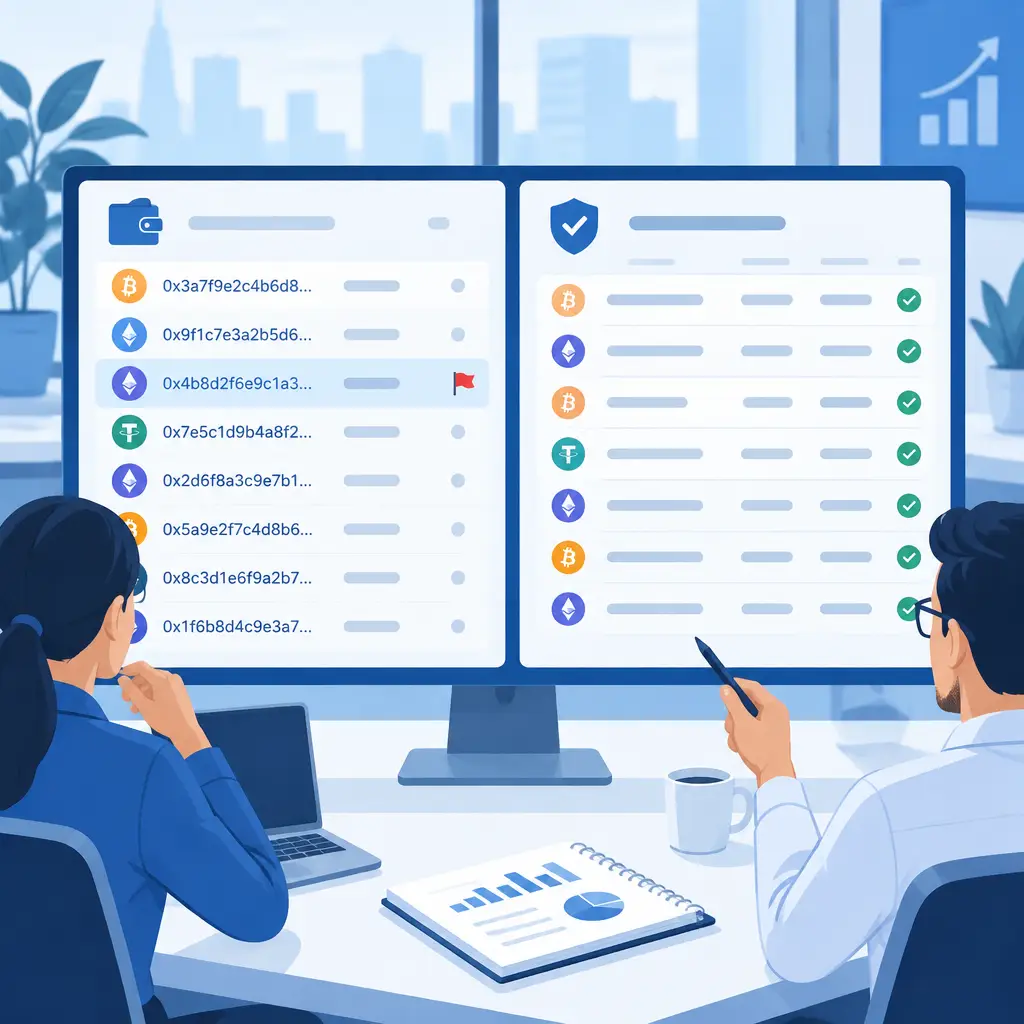
Auditors reviewing digital assets want existence, ownership and completeness evidence. When a network is in the news for enforcement, expect more questions about wallet attribution: which addresses belong to the entity, which are customer or counterparty addresses, and which are third-party venues. If wallet labels live in spreadsheets, now is a good moment to move them into your crypto bookkeeping software so every on-chain movement carries an owner tag, a purpose, and a source document reference.
Disclosure and risk factors
For entities with material SOL holdings or Solana-based operations, consider whether your risk disclosures and going-concern or concentration notes reflect regulatory risk in specific jurisdictions. The investigation does not by itself create an impairment trigger or a disclosure obligation that we can point to from the source. It is a data point your disclosure committee should see and consciously weigh, with the decision recorded.
What it means for individual filers and small holders
Although this article is written for firms, many advisers also serve individuals, so a short note is warranted. Nothing in the report changes tax treatment for holders outside China. A price fall is still a price fall for capital gains and loss purposes, and disposals still need cost basis and timestamps. Where an individual client is a tax resident of mainland China, the legal position described in the report, crypto activity being illegal under the 2021 rules, is a matter for local legal advice, not something a bookkeeping workflow can resolve. Advisers should avoid giving opinions on Chinese law outside their competence and should refer clients to qualified local counsel.
A practical checklist for the next two weeks
None of the steps below depend on facts beyond the source. They are about making your records resilient to a news-driven question from an auditor, a bank, or a regulator.
Map exposure
- List every entity, client and counterparty with any China nexus: staff, users, offices, or service providers.
- List all SOL and Solana-ecosystem positions, including staked balances and tokens held in smart-contract protocols, with current fair values and the pricing source.
- Identify any service providers, such as custodians, RPC providers, or promotional or marketing vendors, that have Solana-related activity in China.
Tighten the records
- Confirm every wallet is tagged with owner, purpose and approval trail in your crypto accounting software.
- Snapshot period-end valuations with source and timestamp, and save the export to the close file.
- Re-read your counterparty onboarding standard: does it capture where services are provided, not only where the counterparty is registered?
Brief the people who will be asked
- Give the audit lead and the MLRO or compliance officer a one-page note stating what is reported, what is not, and what you did about it.
- Agree who owns monitoring for follow-up announcements from the People's Bank of China or local regulators.
For protocol-level questions, such as how staking rewards, liquid staking tokens or on-chain fees should be recorded, our explainer on how DeFi protocol mechanics flow into your books is a useful companion, and our wider crypto compliance reporting hub collects related guidance.
What to watch next
The report leaves several things open. It does not say how long the investigation will run, which "relevant persons" are in scope, or whether any measures will touch the network's infrastructure or its intermediaries. It also does not say whether other networks or exchanges will receive similar attention. Until there is more detail, the sensible position is to monitor, document, and avoid drawing conclusions the source does not support.
The wider lesson is structural. Regulators increasingly act on promotion, market access and offshore service provision, not only on trading or custody. Those are activities that appear in marketing spend, vendor contracts and entity structures, which are records finance teams often keep in separate systems from the ledger. Linking them, so a single query can show who your entity paid, what for, and where, is the kind of control that pays off when an unexpected headline arrives. Choosing digital asset accounting software that supports that linkage, with an audit trail the reviewer can follow without your help, is a procurement criterion worth adding to your next vendor review.
FAQ
Does the China probe change how SOL is accounted for?
No. The report describes an enforcement action and a halt to promotional events. It does not alter recognition, measurement or disclosure requirements under any accounting framework. Measurement follows your existing policy, and the price source and timestamp should be documented.
Is this a tax event for holders outside China?
Nothing in the source suggests so. Disposals, staking income and losses are treated under the tax rules of each holder's own jurisdiction. The price decline reported is relevant to gains and losses only when a taxable disposal occurs.
Should firms with no China exposure still do anything?
A light-touch review is sensible: confirm wallet attribution, record the valuation source at period end, and note the event for your risk file. If you truly have no China nexus, the review should take little time and leaves you ready for questions.
What does the offshore-services provision mean for counterparties?
As reported, the latest legislation bars offshore Chinese entities and individuals from providing crypto services to people in China. If a counterparty fits that description, record that in onboarding and consider whether it affects your risk rating. Seek local legal advice for any definitive reading.
How can crypto accounting software help in a situation like this?
It can tag wallets by owner and purpose, pin valuations to a source and time, and export an audit trail. Those functions let you answer an auditor's or regulator's question from the ledger instead of rebuilding evidence from scattered files.
Source: Protos