
Washington Issues Draft NFT Tax Guidance: What Accounting Firms and CFOs Must Assess Now
Washington state has released a draft Excise Tax Advisory (ETA) that replaces the department's earlier interim guidance on nonfungible tokens and substantially expands the framework that marketplace facilitators, direct sellers, and their advisors must navigate. The draft covers sales-and-use tax, business-and-occupation (B&O) tax, sourcing, bundled transactions, royalties, apportionment, and resale activities. Taxpayers have until November 18, 2026 to comment. Although the guidance does not yet carry a final effective date, firms should begin assessing their positions now, because the draft signals where Washington is heading and explicitly warns that other states are expected to follow.
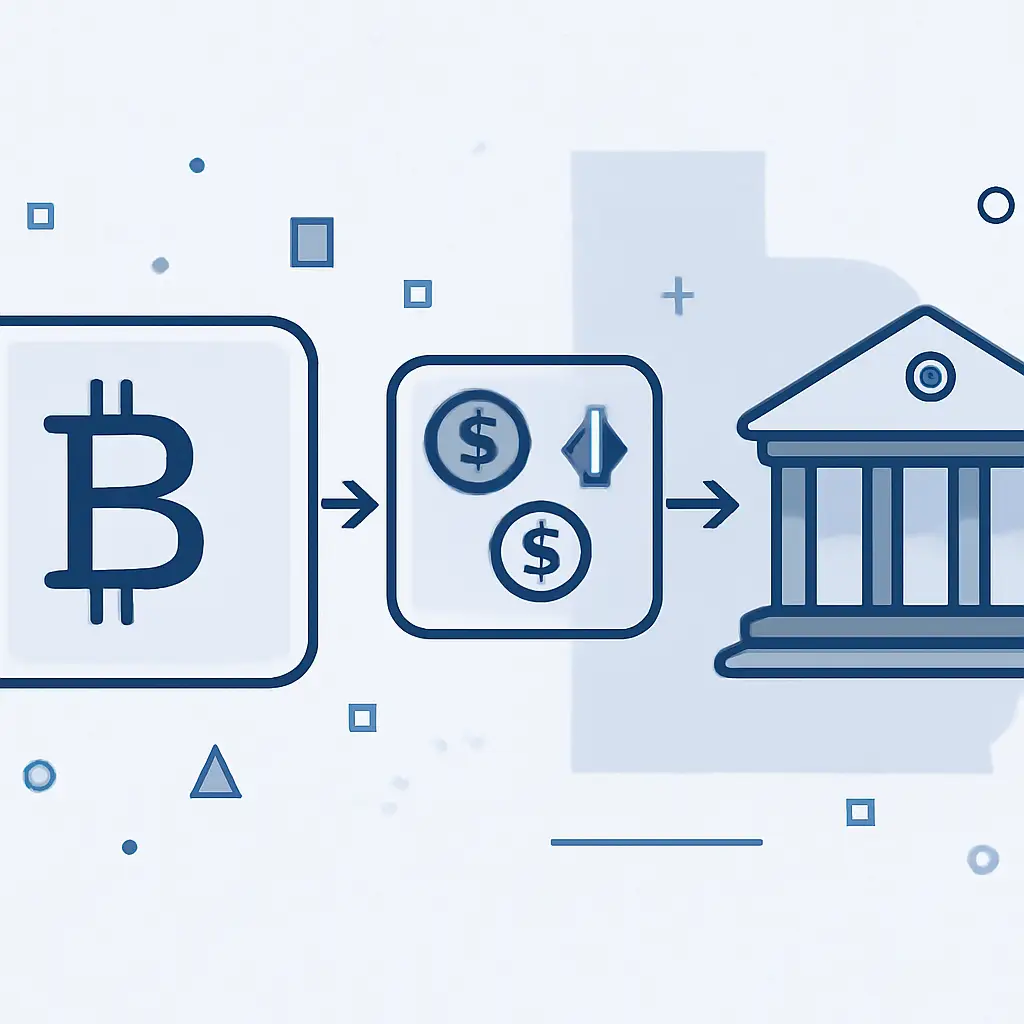
What the Draft ETA Covers and Why It Matters for NFT Accounting
The earlier interim guidance gave taxpayers a partial picture. The draft ETA is considerably more structured. For firms doing nft accounting work or advising clients who operate NFT platforms, the breadth of the new document is the first thing to register: it is not merely a clarification but a replacement of all prior conflicting written instructions and taxpayer rulings on the topic.
Scope: beyond the interim guidance
Where the interim guidance addressed relatively narrow questions, the ETA tackles the full lifecycle of an NFT transaction in Washington. Topics addressed include how a sale is sourced to the state, how to handle transactions where an NFT is bundled with other goods or services, how royalty income flowing back to original creators is classified, and how sellers that resell NFTs on secondary markets compute their taxable measure. Each of those elements carries distinct B&O and sales-tax consequences, and the ETA works through them in a more detailed way than anything Washington has published before.
Why the draft does not provide immediate safe harbour
Until the guidance is finalised, taxpayers cannot rely on it to compute actual tax liabilities. The ETA itself directs taxpayers with complex or uncertain fact patterns to request a binding tax ruling from the department rather than self-applying the draft. That limitation matters for compliance planning: firms should treat the document as a forward-looking signal rather than a current safe harbour, and should factor the possibility of immediate application upon finalisation into their risk assessments.
Marketplace Facilitators: New Threshold for Classification
One of the most consequential elements of the draft is its expanded definition of a marketplace facilitator. Washington now states explicitly that a taxpayer does not need to process payments to be considered a facilitator. That single clarification has significant reach. Any platform that lists NFTs for third-party sellers, handles the buyer-seller matching, or manages the transaction workflow could meet the facilitator threshold even if a separate payment processor handles the actual money movement.
Registration and nexus considerations
Whether a business must register as a facilitator or as a seller depends on nexus and revenue thresholds. The ETA sets out the relevant factors, but because Washington's economic nexus rules already apply to digital goods, many out-of-state platforms may already be within scope without realising it. Firms advising clients with multi-state operations should map Washington-sourced NFT revenue against those thresholds as a priority action.
B&O tax reporting for facilitators
A registered marketplace facilitator must report its gross income from retail NFT sales under the retailing B&O tax classification. That figure includes revenue from sales made on behalf of third-party NFT sellers. The facilitator can claim a deduction for that third-party revenue, but not for income from its own direct sales. That asymmetry is important: a platform that sells some NFTs itself and facilitates others for third parties must keep those revenue streams strictly separated in its records, and any crypto bookkeeping software or digital asset accounting software used to capture platform income must be able to apply that distinction at the transaction level.
Reporting obligations toward sellers
A marketplace facilitator is required to provide each of its NFT marketplace sellers with a monthly statement of that seller's gross Washington sales made through the platform. That obligation introduces a structured data-sharing requirement between platforms and their sellers, and firms advising either party should check whether current systems can generate compliant reports at the required frequency and granularity.
Sales-tax collection and remittance
Unless a specific exemption applies, a registered facilitator must collect and remit retail sales tax on all taxable NFT sales sourced to Washington at the combined state and local rate applicable where the sale is deemed to occur. Sourcing rules for digital transactions are always fact-specific, and the ETA addresses this in its examples section, which the draft acknowledges is more detailed than its predecessor.
NFT Marketplace Sellers: Separate Obligations
A registered NFT marketplace seller, as distinct from a facilitator, must report gross revenue from its own retail NFT sales under the retailing B&O tax classification. Sellers cannot deduct income from their own direct sales, but they can deduct sales made by a facilitator on their behalf, on the basis that the facilitator bears the tax-collection obligation for those transactions. Sellers retain the obligation to collect and remit retail sales tax on direct sales at the combined state and local rate for the sourcing location, unless an exemption applies.
Implications for B2B clients operating as sellers
CFOs at technology businesses, gaming studios, entertainment firms, and financial institutions that sell NFTs directly, even as part of a broader product offering, need to confirm whether Washington activity crosses the registration threshold. The interplay between B&O and sales-tax reporting, combined with the sourcing rules and the deduction asymmetries described above, creates a compliance surface that is meaningfully more complex than standard digital-goods treatment.
Bundled Transactions, Royalties, and Apportionment
The ETA addresses fact patterns that are common in practice but that interim guidance left largely unresolved. Bundled transactions arise when an NFT is sold together with another taxable or non-taxable item or right, and the tax treatment depends on how the bundle is characterised and whether the components can be separated. Royalty income, which flows back to original NFT creators when tokens are resold on secondary markets, is assigned its own treatment. Apportionment rules become relevant where a facilitator or seller has Washington income from NFT activity alongside income from other activities, and the ETA requires separate reporting under the appropriate tax classification for each income stream.
Practical accounting implications
For firms doing nft accounting for clients with diverse revenue streams, the bundling and apportionment provisions reinforce the need for transaction-level tagging. Revenue from NFT sales, royalty receipts, and income from other platform activities must be captured separately in the general ledger and in any digital asset accounting software the firm uses. Aggregate reporting will not be sufficient to satisfy the ETA's classification requirements.
Action Points for Accounting Firms and CFOs
Washington's draft is well-structured and, when finalised, will apply without necessarily providing a transition period. That makes the current window both a planning opportunity and a practical deadline.
Before the November 18 comment deadline
Firms with clients that sell or facilitate NFT sales in Washington should carry out a structured review now. The key questions to answer are: Does the client meet Washington's nexus or revenue thresholds? If yes, should it register as a facilitator or a seller? Are its current systems capable of separating direct-sale revenue from facilitated-sale revenue? Can it generate monthly gross-sales statements for the sellers on its platform? Does it have a process for applying combined state and local sales-tax rates at the sourcing location?
If any of those questions cannot be answered with confidence, requesting a binding tax ruling from the Washington Department of Revenue is the course the ETA itself recommends. Submitting a comment on the draft before November 18 is also an option: the department has explicitly invited public input to assist in finalising the rules, and a well-drafted comment can shape provisions that remain ambiguous in the current text.
Preparing for multi-state expansion
The draft acknowledges explicitly that other states are likely to look at Washington's approach and develop their own NFT tax rules in response. That makes Washington's ETA a leading indicator rather than a local quirk. Firms advising clients with nationwide digital asset operations should treat this as a prompt to audit NFT revenue streams across all states where economic nexus thresholds might be met, not just Washington. The CLARITY Act and stablecoin accounting uncertainty at the federal level compounds the need for state-by-state vigilance: in the absence of a unified federal digital asset tax framework, states will continue to set their own rules, and the pace is accelerating.
System and process readiness
The reporting requirements in the draft, particularly the monthly facilitator-to-seller statement obligation and the B&O classification splits, require crypto bookkeeping software and digital asset accounting software that can tag transactions by role (facilitator vs. seller), by revenue type (direct vs. facilitated), and by sourcing location. Firms that rely on manual reconciliation or general-purpose accounting tools not built for digital assets should assess whether their current stack can support these obligations at scale. The AI accuracy gaps in crypto accounting software identified in recent industry analysis are a relevant caution here: automated classification of NFT revenue by transaction type needs human oversight to catch misclassifications before they create B&O underreporting exposure.

Frequently Asked Questions
Does Washington's draft guidance apply immediately?
No. The draft ETA does not yet have a final effective date, and taxpayers cannot rely on it to compute current tax liabilities. However, once finalised, it could apply without a transition period. Firms should model their exposure now rather than waiting for finalisation.
What is the difference between a marketplace facilitator and a marketplace seller under the draft?
A marketplace facilitator is a business that facilitates NFT sales on behalf of third-party sellers, regardless of whether it processes payments itself. A marketplace seller sells NFTs through a third-party platform. The distinction determines which party must collect and remit sales tax, how B&O income is reported, and what deductions are available. Both roles carry registration requirements if Washington nexus and revenue thresholds are met.
Can a facilitator deduct all NFT sales revenue from its B&O tax base?
No. A facilitator can deduct gross income attributable to sales made on behalf of third-party sellers, but it cannot deduct income from its own direct NFT sales. That asymmetry means facilitators that also sell NFTs directly must maintain strict revenue separation in their accounting records.
How should firms handle clients that are based outside Washington but sell NFTs to Washington residents?
Washington's economic nexus rules already extend to digital goods. Out-of-state businesses that exceed Washington's revenue thresholds from Washington-sourced NFT sales may need to register as facilitators or sellers. The draft's nexus discussion makes clear that physical presence is not required, so firms advising multi-state clients should map Washington-sourced revenue against the applicable thresholds.
Should firms submit comments on the draft before November 18?
Yes, if a client has material Washington NFT activity or if the draft's provisions are ambiguous for that client's business model. The department has explicitly invited public input. A targeted comment can help shape provisions that remain unclear and can also serve as a contemporaneous record of the firm's good-faith engagement with the regulatory process.
Source: BDO Insights