
Crypto Audit Software: US Accounting and Audit Requirements Explained
Crypto audit software has moved from a nice-to-have tool to a professional necessity for any US accounting firm that serves clients holding digital assets. The Financial Accounting Standards Board finalised ASC 350-60, its dedicated intangible asset guidance for cryptocurrency, and the SEC has intensified scrutiny of how public companies disclose and value their crypto holdings. At the same time, the IRS continues to expand its digital asset reporting framework. For the crypto accountant working in public practice or in-house, the question is no longer whether specialised software is needed, but which capabilities are non-negotiable. This guide breaks down the accounting standards, audit procedures, and software features that US firms must understand before they can sign off on a client's digital asset position.

The US Regulatory Landscape for Digital Asset Accounting
US accounting and audit requirements for digital assets sit across several overlapping frameworks. ASC 350-60, effective for fiscal years beginning after 15 December 2024, requires companies to measure certain crypto assets at fair value each reporting period and recognise changes in profit or loss. That shift away from the old indefinite-lived intangible model, which only permitted downward impairment, changes the audit evidence requirements substantially. Auditors now need to verify fair value measurements at each balance sheet date rather than simply confirming that an impairment test was performed.
SEC Staff Accounting Bulletin 121
Beyond FASB guidance, the SEC's Staff Accounting Bulletin 121 introduced requirements for entities that custody digital assets on behalf of others to record a liability and a corresponding asset on their balance sheet. Although SAB 121 has faced legislative challenges, its influence on how custodians and broker-dealers are audited remains real. For crypto accounting for accounting firms operating in the US, understanding which framework applies to each client, whether that is ASC 350-60, SAB 121, or investment company guidance under ASC 946, is the starting point for any engagement.
Key Regulatory Frameworks Table
| Framework | Applies To | Key Requirement | Effective Date |
|---|---|---|---|
| ASC 350-60 | Companies holding qualifying crypto assets | Fair value measurement with P&L recognition of changes | Fiscal years beginning after 15 December 2024 |
| SAB 121 | Entities custodying crypto for third parties | On-balance-sheet liability and asset recognition | In effect; subject to ongoing regulatory review |
| ASC 946 | Investment companies holding crypto | Fair value per existing investment company guidance | Ongoing |
| IRS Notice 2014-21 and subsequent guidance | All US taxpayers transacting in digital assets | Property treatment; gain or loss on each disposal | Ongoing |
What Crypto Audit Software Must Deliver
The audit of a digital asset portfolio is technically demanding in ways that general-purpose accounting software cannot handle. A crypto accountant needs to trace every transaction from wallet or exchange to the general ledger, confirm ownership or control of private keys, and verify that fair value inputs are sourced from appropriate pricing feeds at the correct date and time. Each of these steps requires data infrastructure that purpose-built crypto audit software is designed to provide.
Minimum Software Requirements
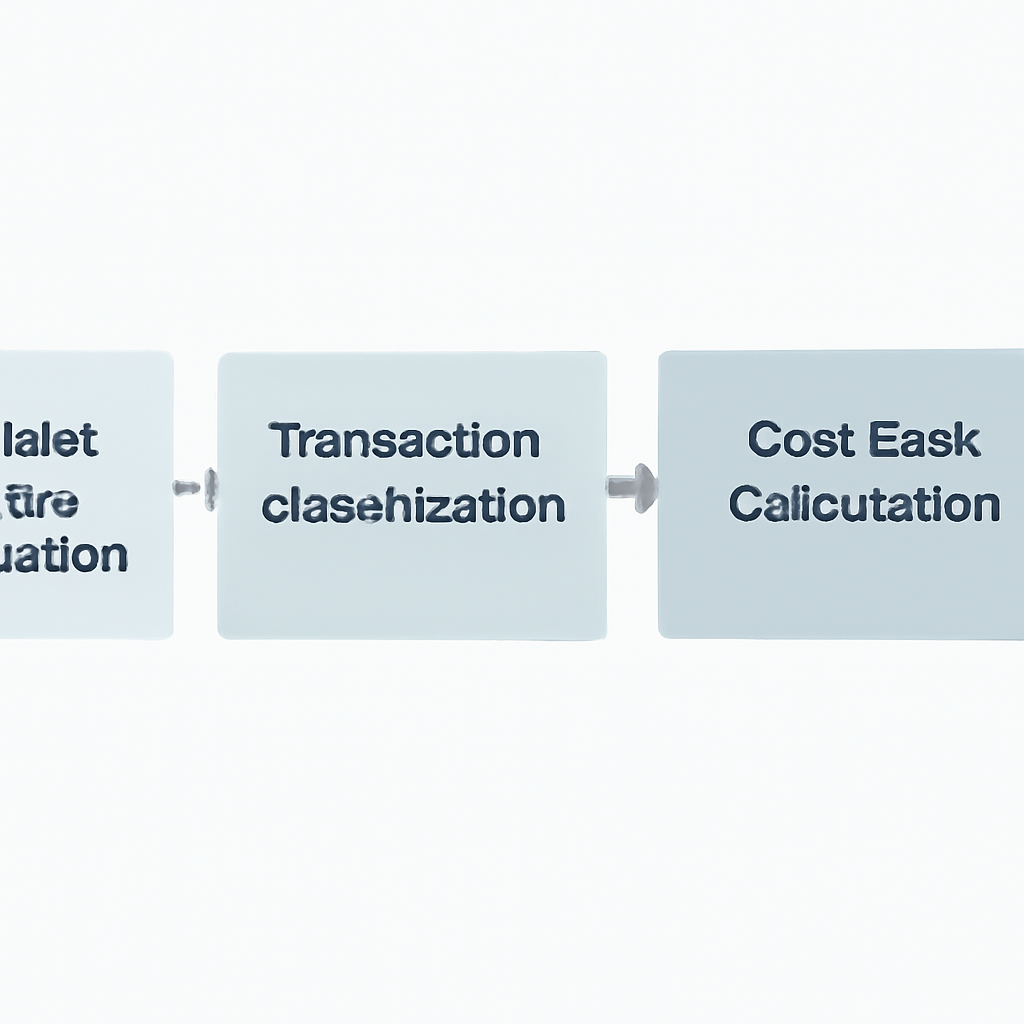
At minimum, the software must connect directly to exchanges, custodians, and on-chain wallets to pull raw transaction data. Manual CSV imports introduce reconciliation gaps and increase the risk of material misstatement. Once data is ingested, the system needs to classify each transaction automatically: disposal, receipt, internal transfer, fee, staking reward, or airdrop. Classification errors cascade into cost basis errors, which in turn affect both the financial statements and the tax return. A reliable audit trail requires that every classification decision is logged, timestamped, and reversible so that the auditor can follow the logic during fieldwork.
Cost Basis Methods and Their Audit Implications
The IRS permits several cost basis methods for digital assets, including first-in first-out, specific identification, and, under updated guidance, certain forms of highest-in first-out. The method a client selects has a direct impact on taxable gains and on the carrying value reported under ASC 350-60. For the crypto accounting for auditors community, verifying cost basis is one of the most time-consuming parts of any digital asset audit, particularly when a client has traded across multiple exchanges over several years.
Specific Identification Method
Specific identification is generally the most tax-efficient method when it can be substantiated, but it requires the most robust record-keeping. Each disposal must be matched to a specific lot, with evidence that the lot was identified before or at the time of the transaction. Crypto audit software that supports specific identification must maintain a complete lot inventory from the date of first acquisition, handle transfers between wallets without losing lot attribution, and produce a report that maps every sale to its corresponding purchase. Without that traceability, the auditor cannot validate the client's gain calculations, and the tax position becomes indefensible.
Cost Basis Methods Comparison Table
| Cost Basis Method | IRS Acceptance | Audit Complexity | Typical Use Case |
|---|---|---|---|
| First-In First-Out (FIFO) | Yes | Low to medium | Simpler portfolios; rising markets |
| Specific Identification | Yes, with contemporaneous records | High | Active traders; tax optimisation |
| Highest-In First-Out (HIFO) | Permitted under specific identification rules | High | Minimising short-term gains |
| Average Cost | Not explicitly confirmed for crypto | Medium | Less common; higher risk |
Crypto Accounting for Funds and Institutional Portfolios
Crypto accounting for funds introduces a layer of complexity that retail-focused tools cannot address. A fund holding digital assets alongside traditional securities needs a system that can produce a net asset value calculation incorporating both asset classes, handle the timing differences between on-chain settlement and traditional T+2 settlement, and allocate gains and fees across multiple investor share classes. Crypto fund accounting software must therefore integrate with the fund's existing fund administration platform or be capable of producing outputs in formats that the administrator can consume.
Income Recognition for Staking and DeFi
Staking income, lending interest, and DeFi yield all require income recognition treatment that differs from simple capital gains. For a fund auditor, each income stream needs to be traced to the underlying protocol transaction, valued at the date of receipt, and classified correctly under the fund's accounting policy. The audit risk here is that income is either omitted entirely because it was not flagged by the data pipeline or double-counted because the same reward appears both as an on-chain transaction and as a line item in an exchange report. Good crypto audit software eliminates this by deduplicating transactions at source and flagging anomalies before the auditor arrives.
Audit Procedures Supported by Specialised Software
The AICPA's guidance on auditing digital assets outlines a set of procedures that practitioners should consider, including confirming existence and ownership of assets, evaluating the completeness of the transaction record, and assessing the valuation of assets at the balance sheet date. Each of these procedures is materially assisted by crypto audit software that produces structured, auditor-ready outputs.
Existence and Completeness Testing
Confirming existence typically involves verifying on-chain balances against wallet addresses held by the client. Software that can query blockchain nodes directly and produce a signed confirmation of balances at a specific block height gives the auditor far stronger evidence than a screenshot of an exchange account. Completeness testing benefits from automated reconciliation reports that compare exchange records to on-chain data and flag discrepancies. Valuation testing is simplified when the software stores the pricing source, the price at the transaction timestamp, and the price at the period-end date, all in a format that can be exported to the audit working paper file. For crypto accounting for accounting firms with a growing digital asset client base, these capabilities reduce fieldwork time and lower the risk of audit findings.
Choosing Crypto Audit Software: Key Evaluation Criteria
When evaluating tools, firms should focus on data coverage, methodology transparency, and integration depth. Data coverage means the number of exchanges, custodians, and blockchain networks the software supports natively. A tool that covers the major centralised exchanges but lacks DeFi protocol support will leave gaps for any client using Ethereum-based protocols or layer-two networks. Methodology transparency means that the software documents exactly how it classifies transactions and calculates cost basis, in a way that the auditor can review and challenge. Integration depth refers to how the software connects to the firm's existing general ledger and tax systems, whether that is through direct API connections or structured export formats.
Security and Scalability Considerations
Security and data handling are also relevant for accounting firms. Client transaction data is sensitive, and firms have professional obligations around data confidentiality. The software provider should be able to demonstrate appropriate security certifications and provide a data processing agreement that satisfies the firm's internal compliance requirements. Scalability matters too: a firm that audits a single crypto-native startup today may be auditing a multi-entity fund structure next year, and the software must be able to grow with the practice. Robust crypto sub-ledger and cost basis tracking within the platform ensures that the audit trail remains intact as client portfolios grow in size and complexity.
Illustrative Scenario
This scenario is illustrative. It does not describe a real person or client, and the figures are examples only.
To illustrate how this applies in practice, consider the following scenario: Michael is a senior manager at a mid-size CPA firm in Chicago. His firm has recently taken on three new clients that hold significant cryptocurrency portfolios, two private companies and one small hedge fund. During planning for the first audit cycle, Michael realises that his team has no scalable way to verify transaction completeness or confirm cost basis across the clients' combined holdings on fifteen exchanges and four blockchain networks.
Michael implements CryptaCount, connecting each client's wallets and exchange accounts through the platform's direct integrations. The system ingests several years of transaction history, classifies each event, and produces a reconciled sub-ledger for each entity. For the hedge fund, the crypto fund accounting software module allocates staking income across investor classes and produces an NAV report that the fund administrator can reconcile against their own records. During fieldwork, the audit team uses CryptaCount's auditor-ready export to verify existence, completeness, and fair value in a fraction of the time a manual process would have required. The firm completes all three engagements without qualification, and Michael is already in conversation with two more crypto-native prospects.
Frequently Asked Questions
What is crypto audit software and why do US accounting firms need it?
Crypto audit software is a specialised platform that ingests digital asset transaction data from exchanges, wallets, and blockchain networks, then classifies, reconciles, and values those transactions for accounting and audit purposes. US firms need it because the volume and technical complexity of on-chain data makes manual audit procedures impractical and increases the risk of material misstatement. ASC 350-60 and IRS reporting requirements both demand a level of transactional granularity that general-purpose tools cannot provide.
How does ASC 350-60 change the audit of crypto holdings?
ASC 350-60 requires companies to measure qualifying crypto assets at fair value at each reporting date and recognise unrealised gains and losses in net income. This replaces the previous impairment-only model. For auditors, it means fair value evidence must be gathered at every balance sheet date rather than only when indicators of impairment exist, which increases the volume of audit evidence required and makes automated pricing data essential.
What cost basis methods are accepted by the IRS for cryptocurrency?
The IRS treats cryptocurrency as property, so accepted methods include first-in first-out and specific identification, which also enables highest-in first-out when lots are identified contemporaneously. Average cost is not explicitly accepted for crypto as it is for mutual funds. The method chosen affects both the tax liability and the audit trail, so the selection should be documented and applied consistently.
What does a crypto accountant need to verify ownership of digital assets?
Verifying ownership typically involves confirming that the client controls the private keys associated with wallet addresses holding the reported assets. A crypto accountant may request a signed message from the wallet, review custodian confirmation letters, or use software that queries on-chain balances at a specified block height. Exchange-held assets require confirmation directly from the exchange, similar to a traditional bank confirmation process.
How does crypto accounting for funds differ from individual client accounting?
Crypto accounting for funds requires NAV calculation across both digital and traditional asset classes, income allocation across investor share classes, and handling of yield-generating activities such as staking and lending. Fund-level crypto accounting also needs to integrate with fund administration platforms. The audit risk is higher because income streams are more varied and the consequences of misclassification affect investor reporting directly.
Can existing accounting software handle crypto transactions without a specialist tool?
General-purpose accounting software can record crypto transactions as journal entries but cannot ingest raw blockchain or exchange data, classify transaction types automatically, or maintain lot-level cost basis records. For firms with more than a handful of client crypto transactions, this means significant manual effort and a high risk of errors that a dedicated crypto accountant tool is designed to eliminate.
What should accounting firms look for when evaluating crypto audit software?
Firms should assess the breadth of exchange and blockchain integrations, the transparency of the classification and cost basis methodology, the quality of auditor-ready exports, and the provider's data security standards. Scalability matters for firms expecting to grow their digital asset practice. The ability to produce outputs that map directly to audit working paper templates reduces fieldwork time and supports a defensible audit conclusion.
How does crypto accounting for accounting firms generate new advisory revenue?
Firms that can offer digital asset accounting, tax planning, and audit services capture engagements that generalist competitors cannot handle. Crypto-native clients, funds, and corporate treasury teams all need specialist support as reporting requirements tighten. Investing in crypto audit software and training positions the firm as a credible provider in a growing market, often at fee rates above those of traditional compliance work.
Source: CryptaCount