
FIFO vs LIFO Crypto: Cost Basis Methods Every Accountant Must Know
Choosing between FIFO vs LIFO crypto cost basis methods is one of the most consequential decisions an accountant can make for a client holding digital assets. The choice directly affects taxable gains, audit defensibility, and the accuracy of financial statements. Unlike equity portfolios, where a single custodian typically tracks cost layers automatically, crypto holdings often span multiple wallets, exchanges, and blockchains, each carrying its own acquisition cost and timestamp. Without a clearly documented and consistently applied cost basis method, a client's tax return or audited accounts can unravel quickly. This guide explains how FIFO, LIFO, and HIFO work in the context of digital assets, where each method is permitted under applicable accounting and tax rules, how to record disposals in crypto journal entries, and what to look for in a crypto portfolio tracker capable of supporting a compliant, defensible position.
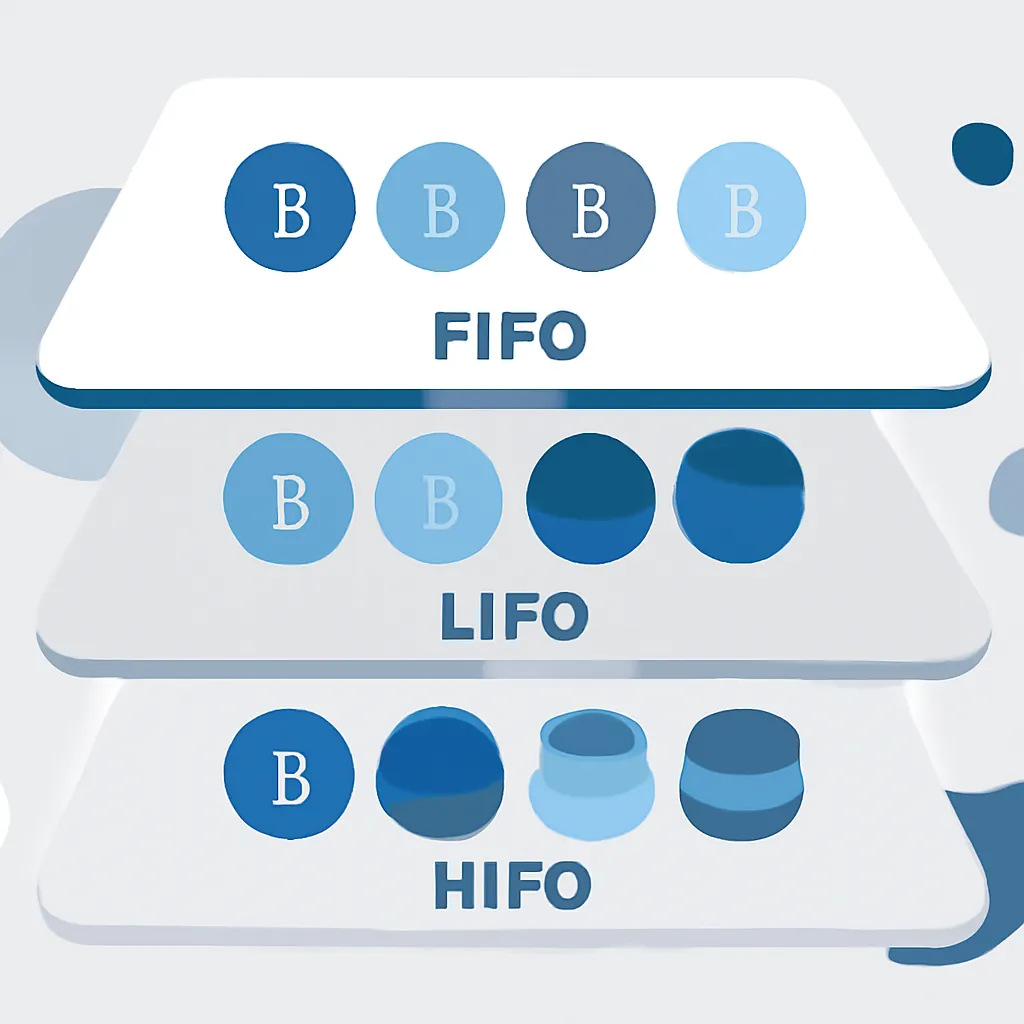
What Is Crypto Cost Basis and Why Does It Matter?
Cost basis is the original acquisition value of an asset, used to calculate the gain or loss on disposal. For crypto assets, this means the price paid at the time of purchase, plus any directly attributable transaction costs such as network fees or exchange commissions. When a client disposes of a crypto asset, whether by selling, swapping, gifting, or using it to pay for goods, the taxable gain is the difference between the disposal proceeds and the cost basis of the specific units deemed to have been disposed of.
Multiple Purchases Create Layers
The complication arises because most clients accumulate crypto across multiple purchases at different prices. A client who bought one bitcoin at three separate prices over twelve months holds three distinct cost layers. When they sell a fraction of that holding, which layer do you draw from? The answer depends entirely on which cost basis method applies, and that choice can produce dramatically different gain figures from the same underlying transaction data.
Getting this right matters beyond tax. Under IFRS and US GAAP, entities holding crypto assets as intangible assets or as inventory must apply a consistent cost formula. Inconsistency between periods is a qualification risk. Auditors increasingly scrutinise cost basis methodology, and regulators in several jurisdictions now require that the method be disclosed explicitly in tax filings. A robust approach to crypto cost basis methods is therefore both a compliance requirement and a marker of advisory quality.
FIFO vs LIFO Crypto: Core Mechanics Compared
FIFO, or first-in first-out, assumes that the earliest acquired units are the first to be disposed of. In a rising market, this typically produces higher taxable gains because the oldest units tend to carry the lowest cost basis. In a falling market, the effect reverses. FIFO is the most widely accepted method globally and is the default or only permitted approach in several jurisdictions, including the United Kingdom and Australia.
LIFO Mechanics and Restrictions
LIFO, or last-in first-out, assumes the most recently acquired units are disposed of first. In a rising market this tends to reduce taxable gains, because the most recent purchases usually carry a higher cost basis. However, LIFO is explicitly prohibited under IFRS, which means it cannot be used for financial reporting purposes by any entity preparing IFRS-compliant accounts. In the United States, LIFO is permitted under US GAAP for certain inventory classes, but the IRS has not sanctioned its use for crypto assets in the same way as for physical goods. Practitioners should therefore treat LIFO for crypto with caution, applying it only where explicitly permitted by the relevant tax authority and only where it does not conflict with the entity's financial reporting obligations.
The table below summarises the core mechanical difference between the three main crypto cost basis methods:
Method Comparison Table
| Method | Disposal Order Assumed | Typical Gain in Rising Market | IFRS Permitted | Common Jurisdictions |
|---|---|---|---|---|
| FIFO | Oldest lots first | Higher | Yes | UK, AU, EU, GLOBAL default |
| LIFO | Newest lots first | Lower | No | Limited; check local rules |
| HIFO | Highest-cost lots first | Lowest | Case-dependent | US (where permitted), select others |
HIFO Crypto Cost Basis: The Tax-Minimisation Method
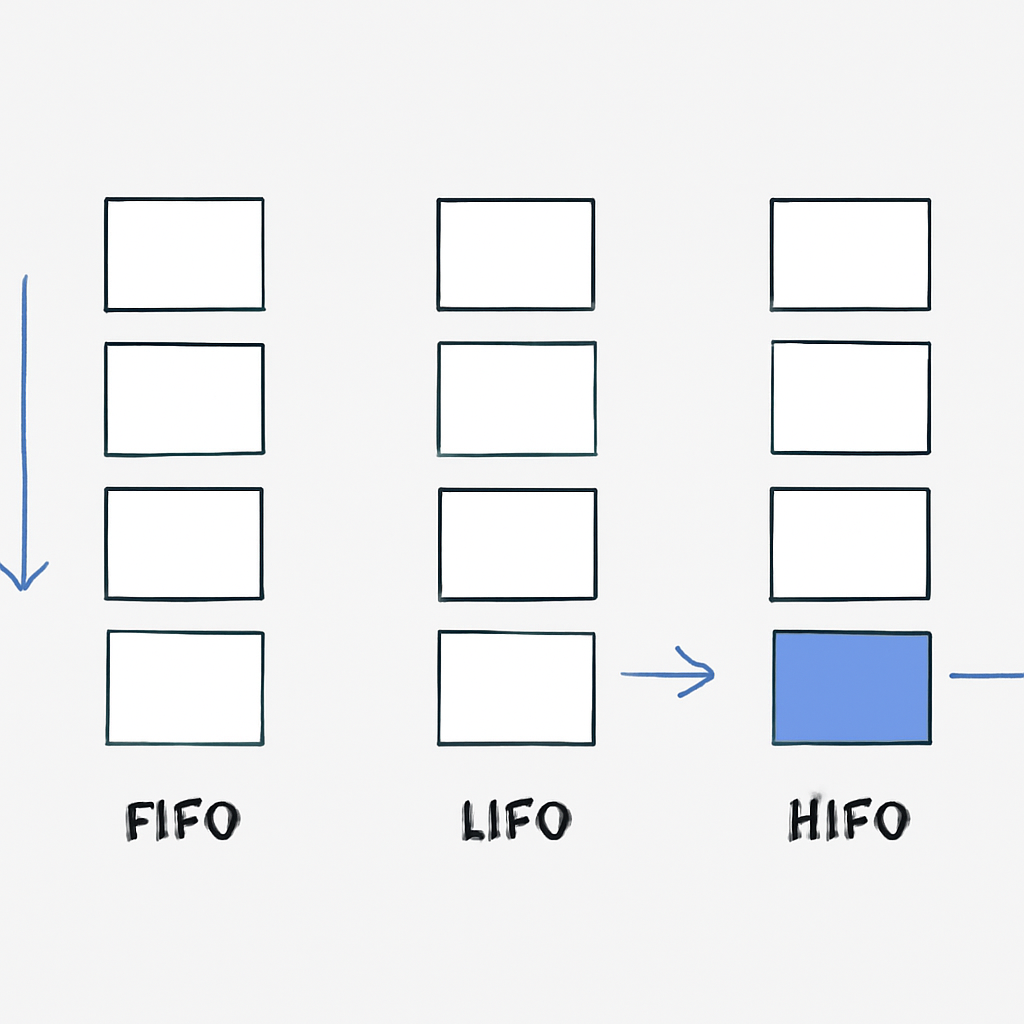
HIFO, or highest-in first-out, is a specific identification variant that selects the highest-cost lots first for disposal. Because the most expensive units are always matched against proceeds, HIFO produces the smallest taxable gain, or the largest deductible loss, of any method. This makes it attractive from a tax planning perspective, particularly for clients with large unrealised losses sitting in old high-cost lots.
Record-Keeping Requirements
The catch is that HIFO requires granular, lot-level record keeping. Every acquisition must be traceable to a specific purchase event, with a confirmed timestamp and price. Generic pooling approaches, which some jurisdictions require, are incompatible with HIFO. In the UK, for example, HMRC mandates a section 104 pooling method for capital gains purposes, which averages cost across all holdings of the same asset and renders HIFO inapplicable. In Germany, FIFO is the required method for crypto disposals under current guidance from the Bundeszentralamt für Steuern.
HIFO in the United States
In the United States, specific identification, including HIFO, has historically been used for securities and is referenced in IRS guidance as a method available for crypto where taxpayers can adequately identify the specific units sold. Adequate identification generally requires that the taxpayer communicate the specific lots to the exchange or custodian at the time of sale and retain that documentation. For clients using self-custody wallets, this process is manual and must be embedded in the firm's workflow.
Jurisdiction Rules: Where Each Method Is Permitted
Jurisdiction rules on crypto cost basis methods vary significantly, and applying the wrong method is not merely a planning error. It is a compliance failure. The table below provides a reference guide, but practitioners should always verify against the latest published guidance from the relevant tax authority, as rules in this area continue to evolve.
Jurisdiction Method Reference Table
| Jurisdiction | Permitted Method(s) | Pooling Required? | HIFO Available? |
|---|---|---|---|
| United Kingdom | Section 104 pool (average cost) | Yes | No |
| United States | FIFO (default), specific ID including HIFO | No | Yes, with adequate ID |
| Germany | FIFO | No | No |
| Australia | FIFO, average cost, specific ID | No | Yes, with records |
| EU (general IFRS entities) | FIFO or weighted average cost | No | No (IFRS constraint) |
Multiclient Complexity
For multinational clients or funds holding crypto across multiple jurisdictions, the complexity compounds. A single disposal event may need to be reported under different cost basis rules in different countries simultaneously. Maintaining a crypto sub-ledger that can switch between jurisdictional cost basis methods without duplicating data entry is a prerequisite for this level of work. A well-configured crypto sub-ledger and cost basis reconciliation system allows firms to maintain a single source of transactional truth while generating jurisdiction-specific gain calculations on demand.
Crypto Journal Entries for Cost Basis Disposals
Regardless of which cost basis method applies, the accounting entries for a crypto disposal follow a consistent structure. The carrying amount of the disposed units, as determined by the chosen cost basis method, is removed from the asset account and the difference between disposal proceeds and that carrying amount is recognised as a gain or loss. Where the client holds crypto as an intangible asset under IAS 38, the asset is typically carried at cost less impairment, and the disposal gain is the excess of proceeds over the impaired carrying value.
Lot Selection Must Be Pre-Decided
For a firm using FIFO, the debit to the disposal account should reference the cost of the earliest lot. For HIFO, it references the highest-cost lot. The key discipline is that the lot selection must be made before the journal entry is posted, not retrospectively, and the selected lot must be locked in the sub-ledger at the point of disposal. Retroactive lot reassignment is a red flag in any audit of crypto accounts.
The table below illustrates the structure of crypto journal entries for a disposal under each method, assuming a simplified single-asset disposal scenario where the client disposes of one unit of a crypto asset:
Journal Entry Structure Table
| Step | Debit | Credit | Notes |
|---|---|---|---|
| Record proceeds | Cash / Receivable | Disposal proceeds account | At fair value on disposal date |
| Remove asset at cost basis | Cost of disposal account | Crypto asset account | Amount depends on FIFO, LIFO, or HIFO lot selected |
| Recognise gain or loss | Cost of disposal (if gain) | Gain on disposal (P&L) | Or reverse entries if a loss arises |
What a Crypto Portfolio Tracker Must Do for Cost Basis Work
Manual spreadsheet tracking of cost basis is viable for a client with a handful of transactions per year. It is not viable for any client with meaningful trading activity, multiple wallets, or cross-exchange holdings. A professional-grade crypto portfolio tracker must do several things well to support cost basis work at scale.
Essential Tracker Capabilities
First, it must ingest transaction data from all sources automatically, including centralised exchanges, decentralised protocols, and self-custody wallets, and timestamp each acquisition and disposal with a reliable source of pricing data. Second, it must allow the firm to select and apply the appropriate cost basis method per jurisdiction, not globally, and retain an audit trail of which lots were matched to which disposals. Third, it must produce gain and loss schedules in a format that maps directly to the relevant tax forms or schedules, reducing re-keying risk.
Parallel Calculations for Multiple Jurisdictions
For firms advising clients across multiple jurisdictions, the ability to run parallel cost basis calculations under different methods from the same underlying data is particularly valuable. A US client with UK tax residency history, for example, may need both a FIFO calculation for HMRC purposes and a HIFO calculation for IRS purposes, derived from the same wallet and exchange history. That kind of multi-method output is only achievable through purpose-built tooling, not spreadsheets.
Illustrative Scenario
This scenario is illustrative. It does not describe a real person or client, and the figures are examples only.
To illustrate how this applies in practice, consider the following scenario:
Sarah is a senior manager at a mid-sized UK accountancy practice with a growing number of clients who hold crypto assets. One of her clients, a digital marketing consultant, has been buying ether sporadically over three years across two exchanges and a hardware wallet. The client disposed of a portion of the holding during the tax year and assumed FIFO would apply because that is what a friend had told them. Sarah's review reveals that the client had not accounted for the section 104 pooling rules that apply to UK crypto disposals, meaning the average cost of the pool, not the FIFO cost of specific early lots, should have been used. The difference is material enough to affect the tax liability.
Using CryptaCount, Sarah imports transaction history from all three sources, reconciles the pool, and recalculates the gain under the correct method. The platform's audit trail records exactly which lots formed the pool at each point and how the pool cost was recalculated after each acquisition. The corrected figures are produced in time for an amended return, and Sarah's firm documents the methodology for future years, reducing the risk of a repeat error. The client, now aware of the pooling rules, also understands why the method cannot be changed year to year for tax advantage.

Frequently Asked Questions
What is the difference between FIFO and LIFO for crypto?
FIFO (first-in first-out) assumes the oldest acquired units are disposed of first, while LIFO (last-in first-out) assumes the most recently acquired units are disposed of first. In a rising market, FIFO typically produces a higher taxable gain than LIFO. LIFO is prohibited under IFRS and is not widely accepted for crypto tax purposes in most jurisdictions, so practitioners should check local rules before applying it.
Which crypto cost basis method produces the lowest tax liability?
HIFO (highest-in first-out) generally produces the lowest taxable gain by matching the highest-cost lots against disposal proceeds. However, it requires granular lot-level record keeping and adequate identification of specific units at the time of disposal. It is not available in all jurisdictions, and some countries, including the UK, require a pooling method that makes HIFO inapplicable.
Can a client change their crypto cost basis method each year?
In most jurisdictions, consistency of method is required between accounting periods. Changing method from year to year to minimise tax in each period is unlikely to be accepted by tax authorities and could be challenged as a lack of consistent application. Any legitimate change of method typically requires disclosure and, in some cases, advance approval from the relevant authority.
Is LIFO allowed for crypto in the United States?
The IRS has not explicitly approved LIFO as a method for crypto assets in the same way it is permitted for physical inventory under US GAAP. The default method is FIFO, but specific identification, including HIFO, is available where the taxpayer can adequately identify the units sold at the time of disposal. Practitioners should monitor IRS guidance, as this area continues to develop.
What records are needed to support a HIFO crypto cost basis claim?
To support a HIFO claim, the taxpayer needs lot-level acquisition records showing the date, quantity, and price of every purchase, along with documentation that the specific high-cost lots were identified for disposal at the time the transaction occurred. Generic transaction exports from exchanges, without lot-level attribution, are insufficient. Purpose-built crypto portfolio tracker software that locks lot selections at the point of disposal provides the most defensible audit trail.
How do crypto journal entries differ under FIFO versus HIFO?
The structure of the journal entries is the same: proceeds are recognised, the carrying amount of the disposed units is removed from the asset account, and the gain or loss is posted to the income statement. The difference lies in the carrying amount figure used. Under FIFO, this is the cost of the earliest acquired lot. Under HIFO, it is the cost of the highest-priced lot. The lot selection must be made before posting, not retrospectively.
Does IFRS allow LIFO for crypto assets?
No. IFRS explicitly prohibits the use of LIFO as a cost formula for any asset. Entities preparing IFRS-compliant financial statements must use either FIFO or weighted average cost. This prohibition applies regardless of the asset type, so any entity holding crypto assets under IFRS cannot use LIFO for financial reporting, even if a local tax authority might permit it for tax calculations.
What should a crypto portfolio tracker do to support multi-jurisdiction cost basis work?
A professional crypto portfolio tracker should ingest data from all wallet and exchange sources, apply jurisdiction-specific cost basis methods to the same underlying transaction data, and produce gain schedules mapped to the relevant tax forms. For firms with clients in multiple countries, the ability to run parallel FIFO, average cost, and specific identification calculations from a single data set is essential for both accuracy and efficiency.
Source: CryptaCount