
Crypto Audit Software: What Accounting Firms Need in Singapore
Singapore has built one of the most structured regulatory environments for digital assets in the Asia-Pacific region, and accounting firms operating there face obligations that go well beyond simple bookkeeping. Whether a firm is auditing a crypto exchange, a fund with token allocations, or a corporate treasury holding stablecoins, the pressure to produce defensible, auditable records is real and growing. Crypto audit software sits at the centre of that challenge. The right platform gives auditors the transaction-level evidence they need, supports the classification frameworks required under Singapore Financial Reporting Standards, and reduces the manual reconciliation work that consumes so much time in a typical digital asset engagement. This guide sets out what firms need to understand about the accounting and audit landscape in Singapore, and what to look for when selecting software to support that work.

The Regulatory Setting for Crypto Accounting in Singapore
Singapore's approach to digital assets is governed by a combination of financial reporting standards, Monetary Authority of Singapore guidance, and the Payment Services Act framework. For accounting firms, this creates a layered set of obligations. Entities that hold or deal in digital payment tokens, security tokens, or utility tokens each face different treatment under Singapore Financial Reporting Standards, which are substantially converged with IFRS. In the absence of a dedicated IFRS standard for crypto assets, firms and their clients must apply existing standards by analogy, typically IAS 2 for assets held for sale in the ordinary course of business, IAS 38 for intangible assets held for other purposes, and IAS 40 or IFRS 9 in more specific circumstances.
Classification Drives Accounting Treatment
This interpretive complexity is precisely why a capable crypto accountant cannot rely on a general-purpose accounting system. The classification decision drives every subsequent measurement, disclosure, and audit test. Firms advising clients in Singapore need tools that support multiple accounting policy elections and can produce a clear audit trail showing how each classification was reached. The table below summarises the most commonly applied standards and when each applies.
| Asset Type | Applicable Standard | Measurement Basis | Common Use Case |
|---|---|---|---|
| Crypto held for sale (inventory) | IAS 2 | Lower of cost and net realisable value | Exchanges, brokers, market makers |
| Crypto held as intangible | IAS 38 | Cost model or revaluation model | Corporate treasuries, long-term holders |
| Crypto held by investment funds | IAS 40 / IFRS 9 | Fair value through profit or loss | Crypto funds, venture portfolios |
| Stablecoins with contractual rights | IFRS 9 | Amortised cost or fair value | Entities receiving settlement in stablecoins |
What Crypto Audit Software Must Actually Do
Core Requirements for Audit Software
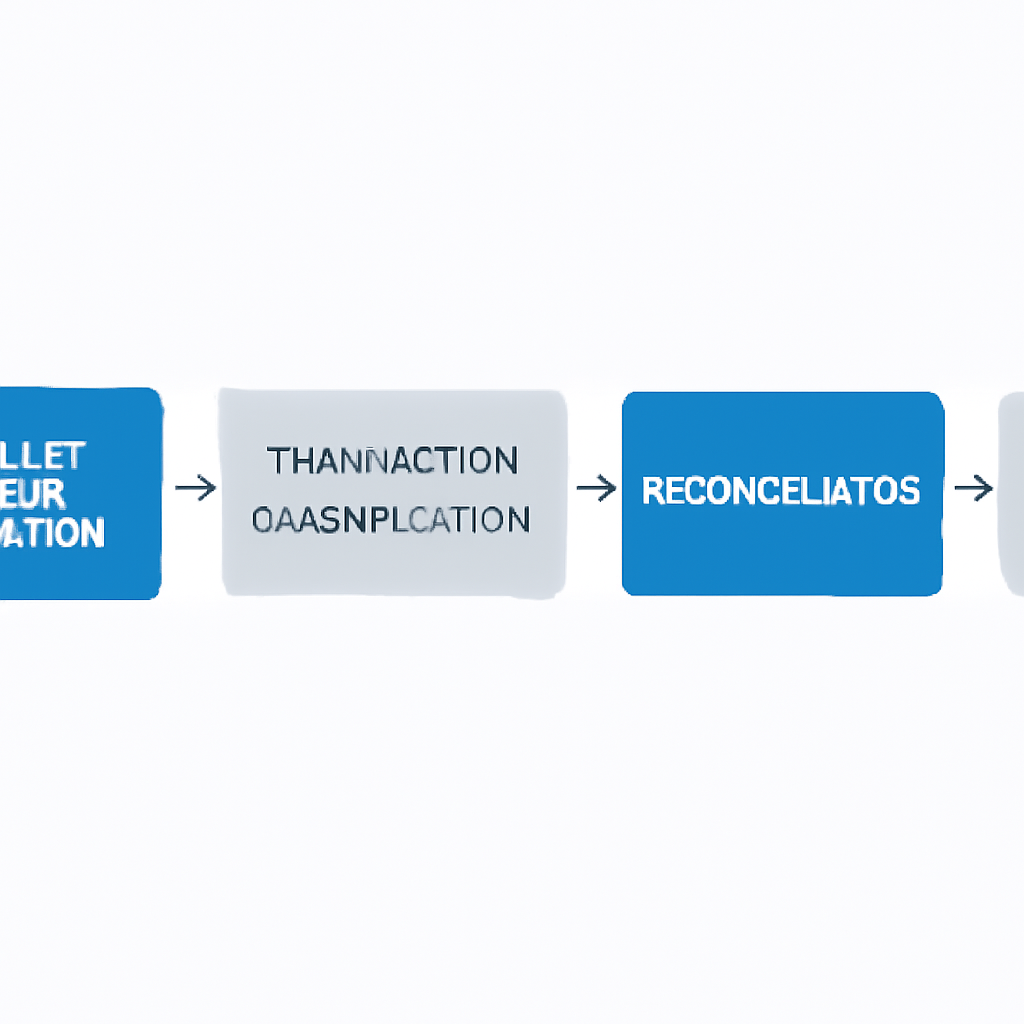
Choosing crypto audit software is not simply a matter of finding a tool that imports wallet data. For firms conducting assurance engagements, the software must do several things simultaneously. It must ingest transaction data from multiple sources, including centralised exchanges, decentralised protocols, and on-chain wallet addresses, and then normalise that data into a consistent format. It must apply cost basis methods consistently across every transaction, flag anomalies for auditor review, and produce outputs that can be mapped directly to financial statement line items. Anything short of that creates manual bridging work that undermines the efficiency of the engagement and introduces risk.
Crypto accounting for auditors specifically requires a clear separation between the preparers' work and the auditors' review layer. A platform that allows an auditor to independently verify transaction history against on-chain data, without being able to alter the underlying records, is far more defensible in an audit context than a spreadsheet-based reconciliation. Audit firms working with Singapore-regulated entities also need to consider how the software handles related-party transactions, token transfers between group entities, and the treatment of gas fees and transaction costs, all of which affect both the financial statements and the audit evidence required.
Crypto Accounting for Funds and the Singapore Fund Landscape
Singapore has attracted a significant number of crypto-native fund structures, particularly variable capital companies and traditional fund vehicles with digital asset allocations. Crypto fund accounting software faces a distinct set of demands compared with corporate accounting tools. Funds must calculate net asset value at regular intervals, allocate gains and losses to investors, and produce reports that satisfy both regulatory requirements and investor due diligence requests. When a fund holds a mix of liquid tokens, staked assets, and illiquid early-stage token positions, the accounting complexity compounds quickly.
Fund Accounting and Regulatory Intersection
Crypto accounting for funds in Singapore also intersects with the MAS licensing regime. A fund manager holding a capital markets services licence for dealing in capital markets products that include digital payment tokens must maintain records that support both financial reporting and regulatory reporting. The two sets of records need to be consistent, which means the underlying accounting system must be authoritative. Firms providing fund administration services in Singapore increasingly expect their crypto fund accounting software to support real-time valuation feeds, automated reconciliation against custodian records, and investor-level reporting that can be exported without additional manual work.
Key Fund Accounting Requirements
| Fund Accounting Requirement | Why It Matters for Audit | Software Capability Needed |
|---|---|---|
| NAV calculation at each reporting date | Auditors must verify pricing inputs and methodology | Automated fair value feeds with source attribution |
| Staking rewards recognition | Income timing and measurement are audit risks | Protocol-level reward tracking with timestamps |
| Investor allocation | Related-party and allocation errors are material risks | Investor ledger with transaction-level traceability |
| Custody reconciliation | Existence and completeness are primary assertions | Direct API connection to custodian or on-chain verification |
Crypto Accounting for Accounting Firms: Building a Scalable Practice
Accounting firms in Singapore that want to build a sustainable digital asset practice cannot treat each engagement as a one-off. The firms that are growing their crypto advisory and audit revenue are those that have standardised their workflows, trained staff to a consistent level, and invested in a platform that handles the data layer so that their professionals can focus on judgement and client communication. Crypto accounting for accounting firms is as much an operational challenge as a technical one.
Standardisation Enables Scalability
Standardisation matters for several reasons. When every engagement is handled differently, quality review is harder, training is slower, and the firm cannot easily move staff between engagements. A shared platform for crypto accounting for accountants within a firm creates a common language and a consistent output format. It also makes it far easier to build reusable working paper templates, which is essential for firms that want to grow their client base without proportionally growing their headcount. The firms seeing the strongest return on their digital asset investment are typically those that deployed a central platform early, built their methodology around it, and used it to support both advisory and assurance work.
The Singapore market in particular rewards this kind of preparedness. Clients here, whether they are exchange operators, family offices, or token issuers, are sophisticated and often have complex multi-jurisdiction structures. They expect their accountants and auditors to be fluent in the technical detail. A firm that cannot produce a reconciled transaction-level schedule quickly, or that struggles to explain how it has treated a particular token category, will lose credibility fast. Having reliable crypto compliance reporting infrastructure in place is not optional for firms that want to compete at the top end of this market.
Key Features to Evaluate in Crypto Audit Software
Not all platforms marketed as crypto audit software are designed with the needs of professional services firms in mind. Some are built primarily for individual filers, others for corporate finance teams, and only a subset are genuinely fit for purpose in an assurance context. When evaluating options, firms should focus on a defined set of capabilities rather than feature lists.
Data Integrity and Cost Basis
Data integrity is the first test. The platform must be able to ingest raw transaction data from exchanges and wallets and store it in a way that is tamper-evident. Auditors need to know that the records they are reviewing have not been adjusted after the fact. Cost basis methodology is the second major consideration. Singapore clients may use different methods depending on asset type and accounting policy, and the software must support those elections consistently and document them clearly. A third area is the quality of the audit trail itself: every classification, every adjustment, and every journal entry should have a traceable origin that an auditor can follow back to source data. Finally, the platform should support multi-entity and multi-currency environments, because most serious Singapore crypto businesses operate across more than one legal entity and hold assets denominated in multiple tokens and fiat currencies.
Illustrative Scenario
This scenario is illustrative. It does not describe a real person or client, and the figures are examples only.
To illustrate how this applies in practice, consider the following scenario:
Priya is an audit manager at a mid-tier accounting firm in Singapore. Her firm has just won a financial statement audit engagement for a locally incorporated crypto exchange that also operates a small proprietary trading desk. The exchange holds a mix of major tokens as inventory, a staking position in one proof-of-stake network, and a treasury allocation in a USD-denominated stablecoin. Priya's team needs to audit the year-end financial statements under Singapore FRS and produce their findings within six weeks.
Using CryptaCount, Priya's team connects directly to the exchange's wallets and trading accounts via API. The platform normalises all transaction data, applies the IAS 2 inventory method to the trading book, and flags the staking rewards for manual review with recommended income recognition treatments. The stablecoin position is automatically mapped to IFRS 9 and valued at the reporting date exchange rate. Within two days, the team has a fully reconciled transaction schedule with on-chain verification for every material balance. The working papers reference CryptaCount's classification logic directly, which satisfies the firm's quality review process and allows Priya to focus her team's time on the judgement-intensive areas rather than data wrangling.

Frequently Asked Questions
What is crypto audit software and how does it differ from standard accounting software?
Crypto audit software is a platform designed to ingest, classify, and reconcile digital asset transactions in a format suitable for financial statement audit. Unlike standard accounting software, it connects directly to blockchain data sources and exchange APIs, applies crypto-specific cost basis methods, and produces tamper-evident audit trails that support auditor independence and evidence requirements.
Which accounting standards apply to crypto assets in Singapore?
Singapore applies Financial Reporting Standards that are substantially converged with IFRS. In the absence of a dedicated standard for digital assets, entities apply IAS 2 for crypto held as inventory, IAS 38 for intangible assets, and IFRS 9 where the asset meets the definition of a financial instrument. The applicable standard depends on the entity's business model and how the asset is held.
What should a crypto accountant look for in audit-ready software?
A crypto accountant needs software that maintains data integrity from source to output, supports multiple cost basis methods, documents every classification decision with a traceable rationale, and produces outputs that map directly to financial statement line items. Multi-entity and multi-currency support is also essential for most Singapore-based engagements.
How does crypto accounting for funds differ from corporate crypto accounting?
Crypto accounting for funds requires NAV calculation at regular intervals, investor-level allocation, and valuation methodologies that satisfy both regulatory and investor reporting requirements. The audit risk profile is also different, with existence, completeness, and pricing of illiquid positions being primary concerns. Corporate crypto accounting focuses more on balance sheet classification and income recognition.
Can crypto accounting for accounting firms be standardised across multiple client engagements?
Yes, and standardisation is one of the key advantages of deploying a central platform. Firms that use consistent software across engagements can build reusable working paper templates, train staff more efficiently, and maintain a uniform quality standard. This is particularly important for firms scaling their digital asset practice in Singapore's competitive advisory market.
What are the main audit risks in a crypto engagement in Singapore?
The primary audit risks are existence and completeness of digital asset balances, the accuracy of fair value measurements at the reporting date, the correct classification of assets under applicable standards, and the completeness of income recognition for activities like staking or lending. Related-party transactions involving token transfers between group entities are also a common risk area.
Is crypto fund accounting software different from general crypto accounting platforms?
Crypto fund accounting software is typically built to handle the specific demands of fund structures, including NAV computation, investor allocation, and custodian reconciliation. General crypto accounting platforms may cover corporate use cases well but lack the investor ledger and regulatory reporting features that Singapore fund administrators and their auditors require.
How does crypto accounting for auditors maintain independence from the preparer?
Audit-grade platforms provide a read-only or separate review layer that allows auditors to verify transaction data and classifications without being able to alter the underlying records. This separation supports the independence requirement and ensures that the audit evidence is drawn from the same data set as the financial statements, without creating a conflict of process.
Source: CryptaCount