
Best Crypto Accounting Software: Wallet Reconciliation Best Practices for Accountants
Wallet reconciliation is the backbone of any credible crypto accounting practice. Without it, cost basis calculations collapse, audit trails break, and clients face unnecessary tax exposure. Choosing the best crypto accounting software is therefore not a cosmetic decision; it directly determines whether your firm can stand behind the numbers it files. For accounting firms, CFOs, and finance teams managing multiple wallets across several blockchains, the operational stakes are high. This guide walks through the core practices that separate reliable reconciliation from guesswork, and explains what to look for when evaluating enterprise platforms, whether you are comparing a cryptio alternative, a bitwave alternative, or any other solution in the market.

Why Wallet Reconciliation Fails in Practice
Most reconciliation problems do not start with bad software. They start with underestimating the complexity of on-chain data. A single client wallet can generate hundreds of transaction types: simple transfers, swaps, staking rewards, gas fee payments, bridge transactions, and NFT mints. Each of these has different tax and accounting treatment depending on jurisdiction. When a firm tries to import raw blockchain data into a spreadsheet or a general-purpose ERP, the gaps appear quickly.
Common Failure Modes
The most common failure modes are duplicate transaction entries caused by overlapping data sources, missing cost basis records for assets received before onboarding, unclassified internal transfers treated incorrectly as disposal events, and stale exchange rates applied to transaction timestamps. Any one of these errors can materially misstate a client's taxable gains or the fair value of their digital asset holdings on a balance sheet. Addressing these issues after the fact, under audit pressure, is far more costly than building a clean process from the start. The right enterprise crypto accounting software removes most of these risks through automation, but the underlying methodology must be sound before automation can help.
The Core Workflow: From Raw Data to Reconciled Ledger
A robust reconciliation workflow follows a consistent sequence regardless of the platform you use. Understanding each stage helps you evaluate whether a given tool actually supports it or simply claims to.
Data Ingestion and Connection
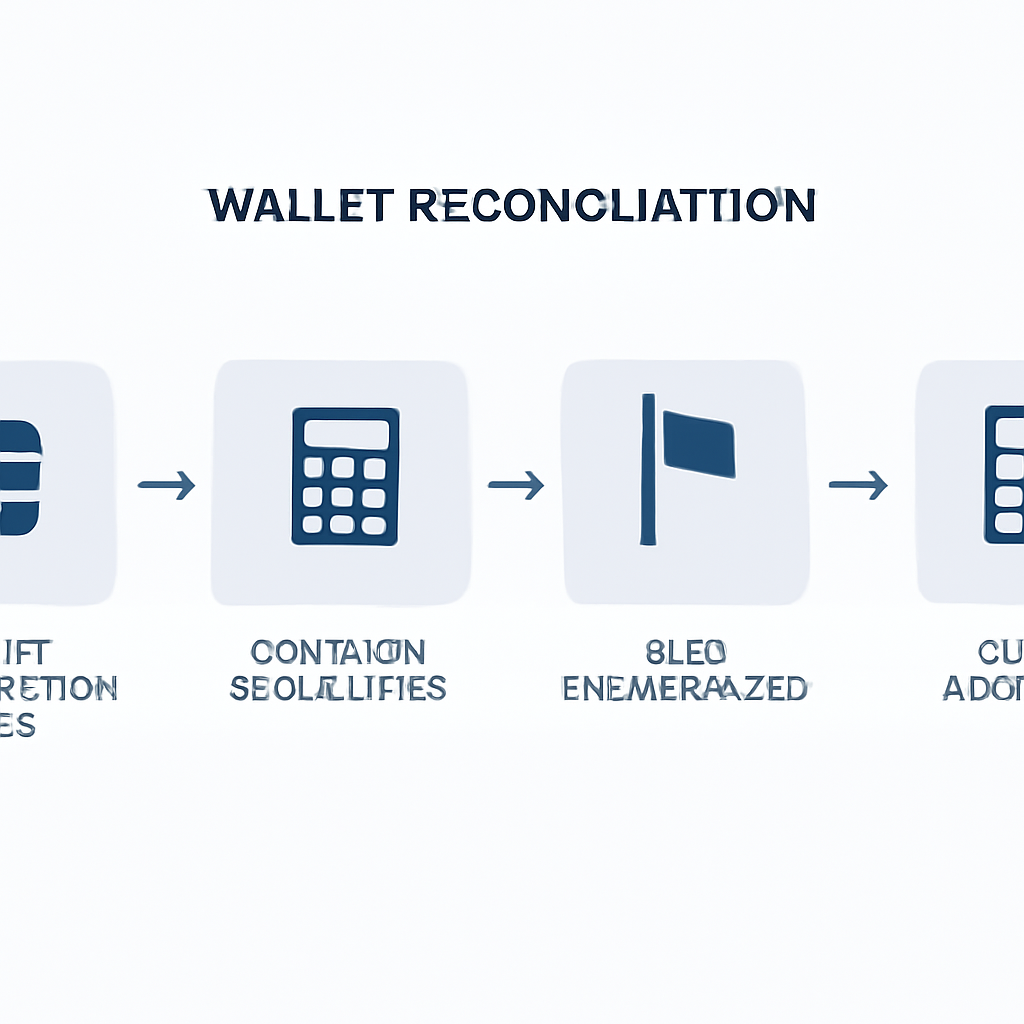
The process begins with data ingestion. Every wallet address and every exchange account the client controls must be connected. Gaps here are fatal. If a single exchange account is missed, the cost basis for assets that moved through it will be wrong. The best crypto accounting software supports direct API connections to major exchanges and accepts wallet addresses for automatic on-chain transaction retrieval, rather than relying solely on manual CSV uploads that introduce version control risk.
Transaction Classification
Once data is ingested, transaction classification follows. Each line item must be assigned a category: disposal, acquisition, income, internal transfer, fee, or a more granular sub-type. This classification drives both the accounting entries and the tax calculations. Platforms differ significantly in how much of this classification is automated versus manual. The strongest tools use rule-based engines that learn from prior classifications and flag anomalies for review rather than silently misclassifying them.
After classification, cost basis assignment occurs. The chosen inventory method, whether FIFO, LIFO, HIFO, or specific identification, must be applied consistently and in line with the relevant accounting standard or tax rule for the client's jurisdiction. This is where many firms using general-purpose tools run into trouble. Changing the inventory method mid-period, or applying it inconsistently across wallets, produces figures that will not survive audit scrutiny.
| Reconciliation Stage | Key Risk if Skipped | Software Feature Required |
|---|---|---|
| Data ingestion | Missing transactions, incomplete cost basis | API and on-chain wallet connectivity |
| Transaction classification | Income or disposal events misidentified | Automated rule engine with manual override |
| Cost basis assignment | Incorrect gain/loss figures | Multi-method support (FIFO, LIFO, HIFO) |
| Discrepancy review | Errors pass into final reports | Exception flagging and audit trail |
| Reporting and export | Figures not compatible with ERP or tax filing | Journal entry export and ERP integration |
Handling Internal Transfers Without Creating Phantom Disposals
One of the most frequent errors in crypto reconciliation is treating an internal transfer as a taxable disposal. When a client moves assets from one wallet they control to another, no economic event has occurred. But blockchain data does not label transactions as internal or external. The software, or the accountant, must make that determination.
Risks of Manual Handling
Firms working with manual processes or basic tools often miss internal transfers, particularly when the sending and receiving wallets sit in different data imports or are managed by different teams. The result is a phantom disposal that inflates taxable gains and, on the other side, an unexplained acquisition with no cost basis. Correcting these mismatches retroactively is time-consuming and exposes the firm to questions from clients about accuracy.
Enterprise Solutions for Matching
Enterprise platforms handle this by allowing accountants to tag wallet addresses as belonging to the same entity and then automatically pairing matching transfers by amount, timestamp, and asset type. The best implementations show a confidence score for each proposed match so the accountant can approve, reject, or manually pair transactions. This functionality is one of the clearest differentiators between a serious enterprise crypto accounting software platform and a basic consumer tool that has been scaled up.
Evaluating the Enterprise Platform Landscape
The market for crypto accounting platforms has matured significantly, and accountants now have several credible options to evaluate. Understanding the distinctions helps firms make a choice that fits their client base and internal workflow rather than defaulting to whichever tool a single client recommended.
Key Evaluation Questions
| Platform Comparison Point | What to Ask | Why It Matters for Accountants |
|---|---|---|
| Audit trail depth | Can every figure be traced back to a source transaction? | Essential for client disputes and tax authority inquiries |
| Multi-client management | Does the platform support separate ledgers per client entity? | Firms need clean separation to avoid data bleed |
| Inventory method flexibility | Can you switch methods per client without system constraints? | Different jurisdictions and standards require different methods |
| ERP and reporting integration | Does it export journal entries in a format your ERP accepts? | Reduces manual re-keying and the errors it introduces |
| Regulatory coverage | Does the platform support the reporting frameworks your clients need? | CARF, DAC8, and local tax rules vary by client geography |
Firms evaluating a cryptio alternative or a tres finance alternative often find that the decision comes down to audit-trail granularity and multi-entity support. Platforms built primarily for treasury management or single-entity reporting can struggle when an accounting firm needs to manage dozens of clients with separate ledgers, custom chart-of-accounts mappings, and jurisdiction-specific reporting outputs. CryptaCount is designed specifically for accounting firms and finance teams, which means the multi-client architecture is foundational rather than bolted on.
Practical Assessment Criteria
When assessing CryptaCount vs Cryptio or a bitwave alternative, the relevant questions are practical: how does the platform handle cost basis when historical data is incomplete, how configurable is the transaction classification engine, and what does the audit export actually look like when a tax authority requests supporting documentation? Answers to these questions reveal far more than feature checklists.
Audit-Readiness as a Standard, Not a Special Mode
Many firms treat audit preparation as a one-off exercise triggered by a client notice or a year-end deadline. The better approach is to build audit-readiness into the ongoing reconciliation process so that nothing special needs to happen when scrutiny arrives.
Traceability in Workflow
This means the reconciliation workflow should automatically produce a complete, timestamped log of every classification decision, every cost basis assignment, and every manual adjustment made by an accountant. It should record who made the change and when. Any platform that does not provide this level of traceability is not suitable for professional accounting use, regardless of how polished its dashboard looks.
Real-Time Processing Benefits
Firms using crypto sub-ledger and cost basis tracking that is connected to their broader practice management workflow gain a compounding advantage. When each transaction is classified, priced, and logged in real time rather than retrospectively, the year-end reconciliation becomes a review rather than a reconstruction. That shift in effort is significant: reconstruction takes weeks, review takes days. For firms billing on fixed fees, that difference goes directly to margin.
Building a Repeatable Client Onboarding Process
Wallet reconciliation quality depends heavily on what happens before any software touches a client's data. Firms that invest in a structured onboarding checklist reduce the downstream reconciliation burden substantially. The checklist does not need to be complex, but it must be consistent.
Essential Onboarding Elements
At minimum, onboarding should capture every wallet address the client controls, every exchange account they hold, the date they first acquired crypto assets, and any historical records they have from prior tax years. Missing historical cost basis is one of the hardest problems to solve retroactively. When a client acquired assets on an exchange that has since closed, or transferred assets between wallets before keeping records, the firm must apply a defensible methodology for estimating cost basis and document that methodology clearly.
Standardization Benefits
Firms that standardise this onboarding process across clients find that the reconciliation workload becomes more predictable over time. Clients who are onboarded cleanly require far less intervention during the year. Those who are onboarded poorly tend to generate support queries, reconciliation disputes, and last-minute corrections that erode profitability. The best crypto accounting software supports this by providing onboarding templates, historical data import tools, and clear flagging of gaps that need client input before reconciliation can proceed.
Illustrative Scenario
This scenario is illustrative. It does not describe a real person or client, and the figures are examples only.
To illustrate how this applies in practice, consider the following scenario:
Priya is a senior manager at a mid-sized UK accounting firm that recently started onboarding crypto-active clients. Her first significant client holds assets across four self-custody wallets and three exchange accounts, with transaction history stretching back several years. Using a general-purpose tool, her team spent considerable time manually matching internal transfers and reconstructing cost basis for assets moved between wallets before records were kept properly. Several phantom disposals had inflated the client's estimated tax liability, and correcting them required a line-by-line review of hundreds of transactions.
After migrating to CryptaCount, Priya's team connected all wallet addresses and exchange APIs directly. The platform's internal transfer matching engine paired the majority of cross-wallet movements automatically, flagging only a small number for manual review. The cost basis engine applied the client's chosen inventory method consistently across all wallets. When the client later received an informal query from HMRC regarding a prior tax year, Priya was able to export a complete, timestamped audit trail within an hour. The client's confidence in the firm increased, and Priya's team recovered time that had previously been lost to manual reconciliation work.

Frequently Asked Questions
What is wallet reconciliation in crypto accounting?
Wallet reconciliation is the process of matching every on-chain and off-chain transaction in a client's crypto wallets against an accounting ledger. It ensures that cost basis records, disposal events, and income figures are complete and accurate. Without reconciliation, tax filings and financial statements cannot be relied upon.
What features should the best crypto accounting software include?
The best crypto accounting software for accounting firms should include direct API and wallet connectivity, automated transaction classification with manual override, multi-method cost basis assignment, internal transfer matching, a full audit trail, and ERP-compatible journal entry exports. Multi-client management is essential for firms handling more than one entity.
How does enterprise crypto accounting software differ from consumer tools?
Enterprise crypto accounting software is designed for accounting professionals managing multiple client entities, each with separate ledgers, custom chart-of-accounts mappings, and jurisdiction-specific reporting requirements. Consumer tools are built for individual filers and typically lack the audit trail depth, multi-client architecture, and ERP integration that accounting firms need.
Is CryptaCount a credible cryptio alternative for accounting firms?
CryptaCount is built specifically for accounting firms and finance teams, which means its multi-client architecture, audit trail, and cost basis engine are designed around professional use cases from the ground up. Firms evaluating CryptaCount vs Cryptio should assess audit trail granularity, multi-entity support, and how each platform handles incomplete historical data.
What makes a good bitwave alternative for an accounting practice?
A strong bitwave alternative for an accounting practice should prioritise audit-readiness, flexible inventory method support, and clean separation between client entities. It should also integrate with the ERPs and reporting frameworks the firm already uses, rather than requiring a parallel workflow. Ease of onboarding new clients with incomplete historical data is another practical differentiator.
How do I handle internal transfers to avoid phantom disposals?
Internal transfers between wallets owned by the same entity are not disposal events and should not trigger a gain or loss. To avoid phantom disposals, tag all wallet addresses belonging to the same client entity within your accounting platform. A good enterprise platform will automatically pair matching transfers by amount, timestamp, and asset type, and flag unmatched transfers for manual review.
What inventory method should I use for crypto cost basis?
The correct inventory method depends on the client's jurisdiction and the applicable accounting standard or tax rule. Common methods include FIFO, LIFO, HIFO, and specific identification. The method must be applied consistently across all of the client's wallets and must not change mid-period without proper disclosure. Your accounting platform should support the method required by the relevant authority.
How should I handle missing historical cost basis for crypto assets?
When a client acquired assets before keeping proper records, the firm must apply a defensible methodology for estimating cost basis and document it clearly. Some jurisdictions allow the use of publicly available historical price data at the time of acquisition. The approach should be disclosed in the tax return or financial statements and applied consistently. A good reconciliation platform flags these gaps during onboarding rather than silently filling them with zeros.
How often should wallet reconciliation be performed?
For active clients, reconciliation should be performed at least monthly. High-frequency traders or DeFi users may require weekly or even real-time reconciliation to prevent a large backlog of unclassified transactions building up. Firms using automated platforms can often set reconciliation to run continuously, reducing the manual effort required at period end.
What does an audit-ready crypto reconciliation report include?
An audit-ready report should include a complete transaction log with timestamps, source references, and classification labels; cost basis records for every asset held; a record of every manual adjustment made and the reason for it; and a summary of gains, losses, and income by asset and period. The report should be exportable in a format that a tax authority or auditor can review without needing access to the platform itself.
Source: CryptaCount